
Key Takeaways
- An initial meeting is the first scheduled conversation between two sides starting a working relationship, and the phrase covers four of them: a prospective client, a team you now manage, a project kickoff, and a meeting a contract requires.
- The preparation is worth more than the performance. Twenty minutes of research and one circulated agenda beats any opening line.
- Talking time predicts the result. In a first client meeting you should be listening for most of it. If you spoke for half the hour, you ran a pitch.
- The meeting is finished when a date is in both calendars, not when it is cordial or the client says they will think about it.
Most advice about first meetings is about charm: what to wear, how to break the ice, which anecdote to open with. The hard part is not the half hour in the room. It is arriving with the right questions, staying quiet long enough to hear the answers, and leaving with a next step both sides have written down. Here is the preparation, a 45-minute agenda with timings, the close and the follow-up.
The four kinds of initial meeting
The phrase covers four settings, which is why a search for it returns practical guides and legal dictionaries side by side. The Law Insider entry shows the contractual sense, where an initial meeting is a defined event that starts a clock; Northwestern's sample agenda for mentoring pairs shows the relationship-building one. They need different agendas:
| Kind of initial meeting | Your main job | Done when |
|---|---|---|
| First meeting with a prospective client | Find out whether you can help, and how | You agree on the problem and a next step is booked |
| Introductory meeting with a team you now lead | Be understood, and hear what is already broken | Everyone has spoken once and knows how you work |
| Project kickoff with a signed client | Lock scope, roles, dates and risks | The plan and the owners are written down and shared |
| Contractually defined initial meeting | Satisfy the clause and record what happened | Minutes exist and the date is on file |
The rest of this guide covers the first version, with notes where the others diverge. If yours is specifically a sales qualification call, the discovery call script with questions and templates goes further into frameworks and objections.
Prepare in twenty minutes
- Read the company's last two announcements and the careers page. The careers page tells you what they are short of.
- Write down the one thing you want to learn. Not three things. One.
- Draft five to nine open questions, ordered from wide to narrow.
- Send the agenda the day before, with a time budget per item. People prepare for an agenda they have seen.
- Collect the dull facts: who else attends, their role, the timezone, room or video.
- Test the link, camera and microphone on the connection you will use.
Regulated professions formalise this. The public defender initial client meeting checklist from the UNC School of Government adds engagement terms, each side's responsibilities and the client's homework for the next meeting to the same four moves, which is a useful test of whether your own list has gaps.
An intake form attached to your booking link does most of this for you. If you would rather have the qualifying questions answered before the meeting than during it, you can set that up on a booking page in a few minutes.
A 45-minute agenda that holds up
Forty-five minutes is the right length. Thirty is too tight to hear a real answer, sixty invites filler.
0:00 to 0:03, frame it. Name the purpose, the finish time and the agenda, then ask if anything should be added. "I have us down for 45 minutes. I want to understand how your onboarding works today and where it breaks, then tell you how we usually handle that, and agree a next step. Anything you want to add?"
0:03 to 0:08, introductions, short ones. Who everyone is and what they are responsible for. Keep your own to three sentences. Nobody books a first meeting to hear a company history.
0:08 to 0:30, their situation. The longest block and the only one that matters. The questions below go here. Your job is to ask, note and stay quiet.
0:30 to 0:38, what you would do. Now, and only now, describe your approach, tied to what they told you. Two or three sentences per point, in their vocabulary. Be explicit about what you would not take on.
0:38 to 0:45, the close. Summarise what you heard: "So the core of it is that enquiries arrive in four places and nobody owns the first reply." Check you got it right. Then propose a next step with a time attached: "I'll send a written summary tomorrow with two options. Can we take thirty minutes on Thursday?" Book it before the call ends. A date agreed in the meeting holds; a date left to email becomes a chase. If the invitation does go out afterwards, a short, clear meeting request email is accepted more often than a bare calendar invitation.
For a project kickoff the middle block changes: deliverables, success measures, milestones, named owners and known risks replace the discovery questions. There are ready-made meeting agenda templates for that version.
Nine questions worth asking
- How does this work today, start to finish?
- What made you look at this now, rather than six months ago?
- Who else is affected when it goes wrong?
- What have you already tried?
- What did you not like about it?
- If nothing changes, what does that cost you over a year?
- What would have to be true for this to be a clear success?
- Who else needs to be comfortable with the decision?
- What usually stops a project like this inside your organisation?
Question six does the heavy lifting: a client who has never quantified the cost of the problem is not yet a client. Question nine tells you whether a proposal has a route to a yes.
Three ways a good first meeting dies
- Budget as an opening question. Asking what someone can spend before you know what they need reads as pricing the room.
- A warm ending with no date. The meeting felt good, nobody wrote anything down, and the follow-up becomes a chase.
- Screen sharing in the first half hour. It turns a conversation into a presentation. Send anything they have to read as an attachment instead.
The follow-up, within 24 hours
Send it the same day or the next morning, while they can still check it against their memory. One screen, no more:
Hi Mara,
Thanks for the time today. To check I understood: enquiries come in through the website form, two shared inboxes and the phone, nobody owns the first reply, and roughly a third wait more than a day. You put that at about four lost projects a quarter.
Two ways forward. Option A is a single intake form that routes to the right person and books the call automatically, live in about a week. Option B is the same plus a shared pipeline so you can see where each enquiry sits, which takes longer to set up but answers the reporting question you raised.
I've put 30 minutes in your calendar for Thursday at 14:00 to walk through both. Before then, could you send me the enquiry volume per month so I can size Option B properly?
Best,
Jonas
Three things make that note work: it repeats their numbers rather than yours, it names a decision instead of asking how they would like to proceed, and it gives them one small task. Whether the client does the task is a reliable test of whether the interest is real.
Setting this up in meetergo
Preparation, booking and the record of what was said are three separate chores in most setups. meetergo keeps them together, and three parts matter for a first meeting.
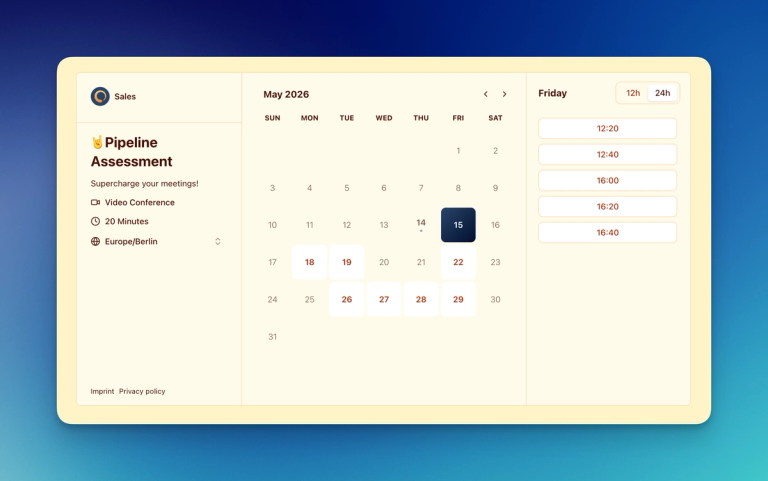
Intake before the meeting. A routing form asks your qualifying questions, and the answers decide which calendar the person lands on and how long the slot is. They arrive attached to the booking, so the twenty-minute preparation is mostly done before you open the file. Multi-step forms and smart routing are on the Suite plan, €99 a month with three people included (checked 2026-11-23); a single booking page with fixed questions works on the free plan, which covers up to three people and three meeting types.
Reminders. Confirmation at booking, an email 24 hours before, an SMS two hours before: the cadence meetergo sets out for professional services teams. Appointment reminders matter more for first meetings than any other kind, because there is no relationship yet to make the no-show awkward.
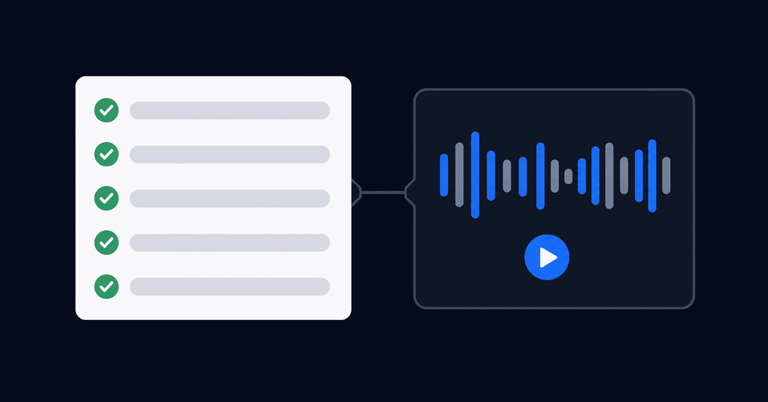
The record. The AI notes app transcribes the conversation and drafts the summary the follow-up note needs. Transcription runs locally on your machine rather than in a cloud service, and no bot joins the call, which counts when a prospective client is describing their internal problems to a supplier they met an hour ago. Summaries are capped on the lower plans, ten a month on Light (€12.90 per person a month, checked 2026-11-23); uncapped notetaking starts at Suite.
The limitation worth knowing: the version that does the work for you, with routing forms and an uncapped notetaker, sits on Suite. At two first meetings a month, a free plan and a booking link is the right size, and a comparison of the free scheduling options is more use than an upgrade. Either way the piece to build first is the booking page with your intake questions on it, because it changes how every later meeting starts. Open an account and the first version takes a few minutes.
Put your intake questions in front of the first meeting.

Put your intake questions in front of the first meeting.
Frequently asked questions
How long should an initial meeting be?
Forty-five minutes for a first client meeting, or thirty if you already know the problem and only need to confirm fit. A project kickoff usually needs 60 to 90 minutes because scope, roles and risks each need their own block.
What do I bring to a first meeting?
A written agenda, your questions and something to take notes with. Add two or three short examples of similar work in case they ask, and leave the deck in the bag unless a presentation was requested.
What if the client asks me to present instead?
Agree, and cut it to five minutes at the 0:30 mark. Say at the start that you want to hear their situation first so the examples you show are relevant, which almost always gets you the discovery time anyway.
Should I send the agenda in advance?
Yes, the day before, with timings. The answers get better because the client has thought about them, and they can add the item they care about before you spend the slot on something else.
What is the difference between an initial meeting and a discovery call?
A discovery call is one kind of initial meeting, the sales-qualification kind, usually shorter and built around a framework. An initial meeting can equally be an introduction to a team you now manage or a kickoff with a client who has already signed.
Who should talk more in a first client meeting?
The client, by a wide margin. The 22-minute discovery block in the agenda above is theirs. If you spoke for more than a third of the meeting, you delivered a pitch and learned very little.