
Key Takeaways
- Most people leave Expandi for one of two opposite reasons. Either the flat $99 a month is more tool than a single seller needs, or the setup and branching depth cost more hours than the campaigns return. Those two complaints point at completely different replacements.
- Expandi has no cheap tier to fall back to. One plan, $99 a month on monthly billing or $79 on annual (checked 9 October 2026). Waalaxy starts at €19 per user and Linked Helper at $29.90, so a solo switch roughly halves or quarters the bill.
- The unit matters more than the number. A per-sender $79, a per-user €19 and a per-identity €50 buy different things, and a flat platform fee buys a fourth. Convert every candidate to cost-per-sending-profile before you compare anything.
- The reply is where nine of these ten stop. Someone answers, and the next move belongs to a person with a calendar tab open and a link to paste. Interest decays across that gap.
- AI data handling is undocumented almost everywhere in this category. Only one vendor below puts a retention and training position in writing. For the rest this page records the absence instead of filling it in.
- Pacing features reduce risk; they do not grant permission. Nothing on this list makes third-party automation allowed under LinkedIn's terms. Caps and ramps only make a restriction less likely.
Expandi runs one plan at $99 a month (checked 9 October 2026), and every price below carries the unit it bills against plus the date it was read, because unit confusion is where comparisons on this topic fall apart. A per-identity €50 and a per-user €19 are not the same purchase, and neither is a per-sender $79.
What You Are Actually Replacing When You Leave Expandi
Expandi is a cloud sequencer built around conditional logic. Campaigns fork on what the prospect does, a profile view, an accepted request, a reply, instead of marching every lead through identical steps. Each connected account gets a dedicated country-based IP, profiles warm up automatically, and sending limits are capped by ranges you cannot override. For a growth team with genuinely branching funnels and someone to maintain them, that design does the job it was built for.
Its billing follows from that positioning. There is one plan, priced for a team rather than an individual, plus an agency arrangement for larger operations.
| Plan | Price |
|---|---|
Business | $99/month (monthly billing), $79/month (annual billing, 20% off) |
PlanBusiness Price$99/month (monthly billing), $79/month (annual billing, 20% off) | |
Agency / Custom | From 10 seats, priced on request |
PlanAgency / Custom PriceFrom 10 seats, priced on request | |
Prices checked 9 October 2026. A 7-day trial covers the full feature set. Email follow-ups can run inside the same sequence as LinkedIn steps.

Expandi holds a 4.3 rating from 162 reviews on G2 (checked 5 October 2026). That is the lowest average in this comparison, though the gap is small and the recurring reviewer theme is time-to-first-campaign rather than broken sending or lost data. Complaints about a steep first week say something different about a product than complaints about dropped sends or lost lists.

So people rarely leave because the sequencer fails. They leave for one of four reasons: the flat price is heavy for one seller with a simple cadence, the branching depth costs more setup time than it saves, scaling an agency means buying seats rather than drawing on a pooled sender list, or the conversation stalls after a reply because booking still means pasting a link.
Three Questions That Narrow the Shortlist Fast
Running the full ten-tool evaluation is a waste of a week. Three questions remove most of the list.
Is your complaint the price or the complexity?
These pull in opposite directions. If $99 is too much for one person sending a straightforward connect-then-message cadence, the answer is a cheap per-user tool and the branching never gets missed. If the problem is that building and maintaining conditional campaigns eats a day a week, the answer is a simpler cloud sequencer at a similar price, not a cheaper one with the same learning curve. Teams that pick on price when the real cost was hours end up rebuilding the same complexity somewhere else.
What unit are you billed against?
Count the LinkedIn profiles you need to send from, then multiply. The same single seller is €19 a month on Waalaxy's yearly Pro plan and $79 on HeyReach's entry tier. Twenty-five senders on HeyReach's Agency tier cost $999, far cheaper per account than its entry tier, which is the point of that plan. An agency and a single seller should not land on the same tool, and a flat per-seat price flatters neither.
What happens in the four hours after someone replies?
No pricing page answers this. Nine of these ten raise a notification and stop. Someone then opens a calendar, picks times, writes them out and sends a link, and a share of those warm threads never answers again. A thin pipeline of replies is a sequencing problem and a better sequencer fixes it. Replies that stall before a call are not, and spending less on the sequencer changes nothing.
The 10 Expandi Alternatives at a Glance
Each row is the cheapest paid tier the vendor publishes with the unit it bills against, plus what the vendor states publicly about AI data retention and model training.
| Tool | Entry price (billing basis) | G2 rating | Books the meeting? | AI data retention |
|---|---|---|---|---|
meetergo | €29.90 per LinkedIn account/month (monthly), €24.90 yearly | Not yet rated on G2 | Yes, inside the chat | Zero retention at the provider (Mistral in Paris, EU-hosted models via Melious) |
Toolmeetergo Entry price (billing basis)€29.90 per LinkedIn account/month (monthly), €24.90 yearly G2 ratingNot yet rated on G2 Books the meeting?Yes, inside the chat AI data retentionZero retention at the provider (Mistral in Paris, EU-hosted models via Melious) | ||||
HeyReach | $79/month for 1 sender (monthly) | 4.6 (73 reviews) | No, link handoff | Not stated |
ToolHeyReach Entry price (billing basis)$79/month for 1 sender (monthly) G2 rating4.6 (73 reviews) Books the meeting?No, link handoff AI data retentionNot stated | ||||
Waalaxy | €19 per user/month (yearly, 50% off list) | 4.5 (1,604 reviews) | No, link handoff | Not stated |
ToolWaalaxy Entry price (billing basis)€19 per user/month (yearly, 50% off list) G2 rating4.5 (1,604 reviews) Books the meeting?No, link handoff AI data retentionNot stated | ||||
Dripify | $39 per user/month (annual) | 4.5 (353 reviews) | No, link handoff | Not stated |
ToolDripify Entry price (billing basis)$39 per user/month (annual) G2 rating4.5 (353 reviews) Books the meeting?No, link handoff AI data retentionNot stated | ||||
lemlist | $55/month, email tier (yearly) | 4.6 (2,323 reviews) | No, link handoff | Not stated |
Toollemlist Entry price (billing basis)$55/month, email tier (yearly) G2 rating4.6 (2,323 reviews) Books the meeting?No, link handoff AI data retentionNot stated | ||||
Sendpilot | $79/month for 1 sender (monthly) | 4.5 (209 reviews) | No, link handoff | Not stated |
ToolSendpilot Entry price (billing basis)$79/month for 1 sender (monthly) G2 rating4.5 (209 reviews) Books the meeting?No, link handoff AI data retentionNot stated | ||||
La Growth Machine | €50 per identity/month (annual) | 4.6 (57 reviews) | No, link handoff | Not stated |
ToolLa Growth Machine Entry price (billing basis)€50 per identity/month (annual) G2 rating4.6 (57 reviews) Books the meeting?No, link handoff AI data retentionNot stated | ||||
PhantomBuster | €56/month, 20 execution hours (annual) | 4.4 (138 reviews) | No, link handoff | Not stated |
ToolPhantomBuster Entry price (billing basis)€56/month, 20 execution hours (annual) G2 rating4.4 (138 reviews) Books the meeting?No, link handoff AI data retentionNot stated | ||||
Dux-Soup | €36.25 per seat/month (yearly, local) | 4.4 (90 reviews) | No, link handoff | Not stated |
ToolDux-Soup Entry price (billing basis)€36.25 per seat/month (yearly, local) G2 rating4.4 (90 reviews) Books the meeting?No, link handoff AI data retentionNot stated | ||||
Linked Helper | $29.90/month | 4.5 (149 reviews) | No, link handoff | Not stated |
ToolLinked Helper Entry price (billing basis)$29.90/month G2 rating4.5 (149 reviews) Books the meeting?No, link handoff AI data retentionNot stated | ||||
Competitor prices and ratings checked 5 October 2026. "Not stated" records that we found nothing published on the subject to cite. Read it as a documentation gap, not as an allegation about what any vendor does.
1. meetergo: Best for Booking the Meeting Inside the Chat
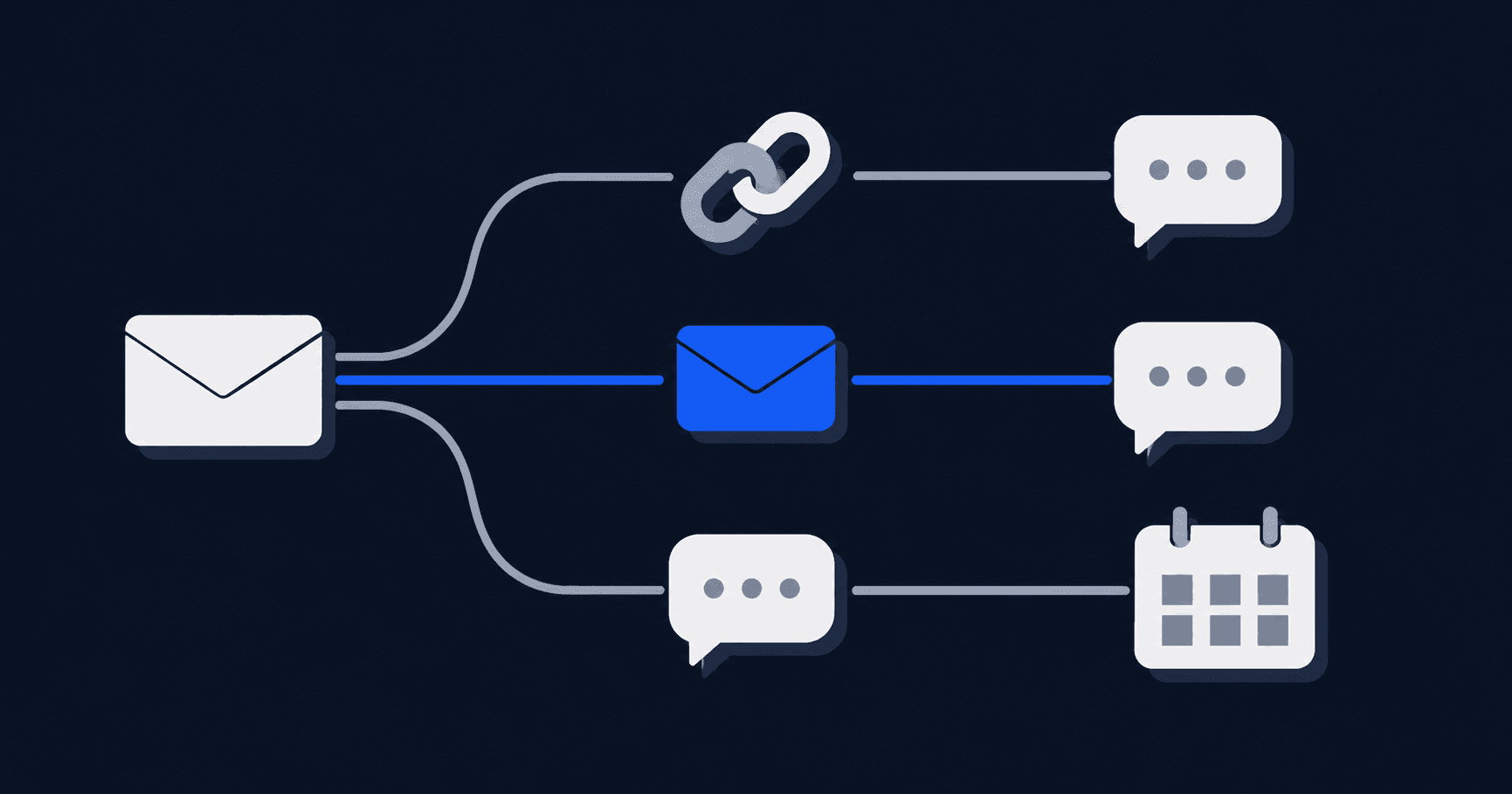
meetergo is a Cologne-built scheduling and revenue platform covering sales, recruiting, consulting and other verticals. Its LinkedIn app closes the loop no other tool here closes: the assistant, Mira, agrees a time inside the conversation itself, so the prospect never leaves the thread or opens a scheduling page. Billing is per connected account rather than per seat, so a team of four with four profiles pays for four accounts and nothing else.
Key Features
Booking inside the LinkedIn conversation
When a lead says yes, Mira reads free slots from connected calendars, offers them in the lead's own time zone, books the one they pick, attaches a meetergo video link and writes the meeting into both calendar and CRM. A reschedule happens in the same thread rather than over email.

Lead import from seven sources
Lists come from LinkedIn search, Sales Navigator, Recruiter, post reactions, event attendees, CSV upload or CRM tags, up to 1,000 people per import, added in the background at a human pace rather than in one burst. Links pasted from an "All" results page convert to a People search automatically.

Sequences that branch on acceptance
Campaigns chain profile views, post likes, connection requests with a note, messages and voice notes, then split on whether the request was accepted inside a deadline of up to ten days. People who never accepted stop receiving messages they cannot read.

One inbox for LinkedIn, WhatsApp and email
Replies land in a shared inbox alongside WhatsApp and email, company pages included, with voice notes, status, snooze and one-click save to CRM. Mira labels incoming replies by intent, which keeps a genuine yes from queuing behind a wall of auto-responders. Admins see every account, team admins see their team's, everyone else sees only their own.

Pricing
| Plan | Price |
|---|---|
Free | €0/month, free forever, unlimited users |
PlanFree Price€0/month, free forever, unlimited users | |
Suite (all apps) | €34.90/user/month monthly, €29.90 billed yearly |
PlanSuite (all apps) Price€34.90/user/month monthly, €29.90 billed yearly | |
LinkedIn app | €29.90 per LinkedIn account/month monthly, €24.90 yearly (launch pricing) |
PlanLinkedIn app Price€29.90 per LinkedIn account/month monthly, €24.90 yearly (launch pricing) | |
One seat per LinkedIn account, 10% off from ten accounts and 20% off from twenty-five, and a 7-day trial on paid tiers. Full breakdown on meetergo pricing.
Where meetergo Shines
- A confirmed slot arrives before the prospect's attention moves on, which is the window speed to lead is built to measure.
- Billing is per connected account, so a four-person team is not buying a flat platform fee before the first message goes out.
- The CRM and the LinkedIn CRM view are the same system the campaigns run from, which removes the usual export-and-reimport step between outreach and pipeline.
- Workflow triggers fire on a confirmed booking, a new deal stage, a lost deal or an answered connection request, so a booked call can start its own prep sequence.

Where meetergo Falls Short
- LinkedIn is the only network it automates; Instagram, X and general web extraction are out of scope.
- The app price sits on top of a plan subscription rather than replacing it, so two line items appear on the invoice.
- Campaign branching is a single accepted-or-not split, which is less expressive than a multi-condition funnel.
- There is no third-party review listing to check it against, which every competitor below can offer and this one cannot.
Customer Reviews
No independent rating exists for the LinkedIn app. There is no G2 or Capterra entry for it, and borrowing a score another meetergo product earned would prove nothing about this one, so the table cell is deliberately blank. Treat it as the honest gap it is: every competitor below can be checked against a sample of strangers, and this one cannot yet. What is available is vendor-reported. meetergo's sales solutions page claims up to 80% fewer no-shows and sales cycles roughly 30% shorter, figures that come from the company rather than from reviewers and should be weighed accordingly until third-party reviews accumulate.

Who meetergo Is Best For
- Teams losing deals between a reply and a confirmed call, not on message volume.
- Companies wanting outreach, inbox, scheduling and CRM under EU jurisdiction.
Test whether booking in-thread changes your reply-to-call rate: open a free meetergo account. Free plan, unlimited users, no card required.
2. Dripify: Best for the Same Cloud Model With Less to Learn
Dripify is the closest like-for-like swap for someone whose only complaint about Expandi is the hours it absorbs. It runs campaigns in the cloud, so a closed laptop does not pause a sequence, and the drip builder is deliberately linear rather than conditional. That simplicity is also the limit. Branching beyond a basic follow-up chain is not expressible, there is no CRM of its own, no video conferencing and no booking engine, so a positive reply still ends up in a human's inbox waiting for a calendar check.
Key Features
Linear drip campaigns
Steps run in sequence with delays between them, which covers the connect-then-follow-up pattern most outreach actually uses without a flowchart to maintain.
Cloud execution
Campaigns continue overnight and at weekends from the platform rather than a browser session, with per-account activity pacing.
Team reporting
Activity and response metrics roll up across seats, so a manager can compare reps without logging into each account.
Pricing
| Plan | Price |
|---|---|
Basic | $39 per user/month (annual billing) |
PlanBasic Price$39 per user/month (annual billing) | |
Pro | $59 per user/month (annual billing) |
PlanPro Price$59 per user/month (annual billing) | |
Advanced | $79 per user/month (annual billing) |
PlanAdvanced Price$79 per user/month (annual billing) | |
Prices checked 5 October 2026.

Where Dripify Shines
- First campaign goes live the same day, which is the specific thing a complex sequencer costs you.
- The entry seat is under half the flat price being replaced.
- Cloud execution keeps sequences running outside working hours without a machine left on.
Where Dripify Falls Short
- Conditional funnels cannot be rebuilt here, so anyone actually using branching loses capability.
- Per-user billing makes a multi-account agency model expensive, since every sender needs its own seat.
- Nothing converts a reply into a booked meeting.
Customer Reviews
Dripify holds a 4.5 rating from 353 reviews on G2 (checked 5 October 2026), a mid-sized sample consistent with the rest of the category. The score sits above the tool it is most often compared against here, and the reviewer themes run the other way too: ease of setup comes up where the deeper platforms collect complaints about it. Read that as a verdict on time-to-first-campaign rather than on ceiling.

Who Dripify Is Best For
- Small sales teams running straightforward cadences who never used the branching they paid for.
- Operators who want cloud sending without proxy and identity configuration first.
3. HeyReach: Best for Agencies Pooling Many Sender Accounts
HeyReach is built around pools of sender profiles rather than seats. You connect many LinkedIn accounts, run one campaign across all of them, and the replies arrive in a single inbox instead of scattered across logins. For an agency sending on behalf of several clients, that pooling is the whole product. Its scope ends at LinkedIn messaging, though: email sequencing needs a second subscription, no CRM or video conferencing ships with it, there is no payments or e-signature layer, and a reply still waits on a human with a link.
Key Features
Pooled sending across accounts
One campaign distributes across every connected sender with per-account pacing, which is the mechanic agencies switch tools to keep rather than to replace.
Unified multi-account inbox
Conversations from all connected profiles arrive in one view, so an operator covering five client accounts is not logging in and out all day.
Volume-priced agency tiers
The per-account cost falls sharply above the entry plan, which is what the larger tiers exist for.
Pricing
| Plan | Price |
|---|---|
Growth | $79/month for 1 sender account (monthly billing) |
PlanGrowth Price$79/month for 1 sender account (monthly billing) | |
Agency | $999/month for 25 sender accounts (monthly billing) |
PlanAgency Price$999/month for 25 sender accounts (monthly billing) | |
Unlimited | $2,999/month, unlimited sender accounts (monthly billing) |
PlanUnlimited Price$2,999/month, unlimited sender accounts (monthly billing) | |
Prices checked 5 October 2026.

Where HeyReach Shines
- Pooled sending is priced for operations running many profiles, where a flat per-seat plan stops making sense.
- One inbox across every client account removes the daily login shuffle.
- Per-account pacing is configurable, which matters when connected profiles differ in age.
Where HeyReach Falls Short
- The single-sender entry plan is poor value next to per-user tools.
- LinkedIn only, so an email lane needs a separate subscription.
- The reply is where the automation stops; booking stays manual.
Customer Reviews
HeyReach carries a 4.6 rating from 73 reviews on G2 (checked 5 October 2026). The average is strong but the sample is the second-smallest on this page, so it is a weaker signal than the four-point-five scores sitting on hundreds of ratings. Reviewer themes track multi-account operation specifically rather than solo sending, which makes the score more useful to an agency reader than to a single seller.

Who HeyReach Is Best For
- Agencies and sales teams running ten or more sender profiles at once.
- Operators whose bottleneck is triaging replies across many accounts rather than generating them.
4. Waalaxy: Best for a Single Seller Cutting the Bill
Waalaxy is priced per user and runs from a browser extension, which makes it the cheapest realistic landing spot for one person leaving a flat platform fee. Setup is an afternoon rather than a week because there is no cloud identity or proxy to configure. There is no pooled sending layer, so an agency reconstructs the same operation as one seat and one browser per client. It holds no CRM, no video conferencing and no payment handling, email credits are a separate purchase from the seat, and turning a reply into a calendar entry stays manual.
Key Features
Extension-driven sequences
Campaigns run through your own browser session rather than a cloud identity, which keeps activity tied to the device you normally use LinkedIn from.
Prebuilt campaign templates
A library of ready sequences covers common patterns, which shortens setup for someone who has never built a cadence before.
Email enrichment as an add-on
Addresses can be found and appended to LinkedIn leads, though the credits are billed apart from the seat.
Pricing
| Plan | Price |
|---|---|
Pro | €19 per user/month (yearly, 50% off list) |
PlanPro Price€19 per user/month (yearly, 50% off list) | |
Advanced | €49 per user/month (yearly) |
PlanAdvanced Price€49 per user/month (yearly) | |
Business | €69 per user/month (yearly) |
PlanBusiness Price€69 per user/month (yearly) | |
Prices checked 5 October 2026. The headline rates assume annual commitment.

Where Waalaxy Shines
- The entry price is the lowest credible figure on this page for a working sequencer.
- No proxy or cloud identity means a first campaign the same afternoon.
- Template campaigns remove the blank-page problem for a first cadence.
Where Waalaxy Falls Short
- The yearly rate is a half-price promotion against list, so budget against the renewal figure.
- Several accounts means several seats, several browser sessions and no single place to watch them.
- The browser has to be open, so nothing progresses overnight.
Customer Reviews
Waalaxy holds a 4.5 rating from 1,604 reviews on G2 (checked 5 October 2026), the second-largest review base in this comparison. An average over sixteen hundred ratings is close to settled by this category's standards, and the people leaving them skew solo and small-team rather than agency. Its 4.5 and the 4.6 scores drawn from fifty or seventy ratings elsewhere on this page do not describe a measurable difference in quality.

Who Waalaxy Is Best For
- Solo sellers and founders doing their own outreach from one LinkedIn profile.
- Anyone validating that this channel produces replies for their offer before committing to a larger bill.
5. lemlist: Best for Email-Led Sequences With LinkedIn Attached
lemlist grew out of cold email, and its depth sits there: deliverability tooling, inbox warming, multichannel sequences, with LinkedIn as one lane rather than the main event. For teams where most pipeline arrives by email, that ordering is correct and the LinkedIn steps are a useful extension. Where LinkedIn is primary it reads differently. Per-account LinkedIn pacing controls are thinner than in the LinkedIn-first tools, the LinkedIn steps sit behind the higher tier, no CRM ships with it, and nothing converts a reply into a confirmed meeting.
Key Features
Multichannel sequences
One cadence can mix email, LinkedIn steps and calls, so a prospect who ignores an inbox can still be reached in a feed.
Deliverability and warm-up tooling
Inbox warming and sending controls are built in, which is the part email-led teams would otherwise buy separately.
Built-in lead database
Contact data is sourced inside the platform, so list building and sending do not need two vendors.
Pricing
| Plan | Price |
|---|---|
Email | $55/month (yearly billing) |
PlanEmail Price$55/month (yearly billing) | |
Multichannel | $87/month (yearly billing) |
PlanMultichannel Price$87/month (yearly billing) | |
Prices checked 5 October 2026. LinkedIn steps require the Multichannel tier, so $87 is the real comparison figure.

Where lemlist Shines
- Email deliverability tooling is deeper than anything else on this page.
- Email and LinkedIn steps live in the same cadence rather than in two tools kept loosely in sync.
- The bundled lead database removes one vendor from the stack.
Where lemlist Falls Short
- LinkedIn capability sits behind the higher tier, so the entry price is misleading for this use case.
- Per-account LinkedIn pacing controls are lighter than in LinkedIn-first tools.
- The booking step is still a person with a calendar, whatever the sequence did before it.
Customer Reviews
lemlist carries a 4.6 rating from 2,323 reviews on G2 (checked 5 October 2026), the largest review base here by a wide margin. Two thousand-plus ratings holding a 4.6 is the firmest outside evidence anything on this page can show. Worth reading carefully, though: most of those reviewers came for the email product, so the score is weaker evidence about the LinkedIn steps than it looks.

Who lemlist Is Best For
- Teams where email drives most of pipeline and LinkedIn is a supporting channel.
- Operators who want deliverability controls and sequencing from one vendor.
Five More Expandi Alternatives Worth Knowing
These five solve narrower problems. Each fits a specific situation well and fits the average reader of this page badly.
Sendpilot
Per-sender pricing with a pooled inbox and tiers that assume you send on behalf of other people: $79 a month for one sender, $329 for five, $699 for twenty-five, all on monthly billing (checked 5 October 2026). Lead scoring ranks replies so genuine interest surfaces above the polite declines, which saves real triage time once a shared inbox carries several hundred open threads. Scope ends at LinkedIn messaging, so email needs a second subscription, and there is no CRM of its own. It holds 4.5 from 209 reviews on G2, a large enough sample for the average to be informative.

La Growth Machine
Bills per identity rather than per seat, annually: Basic €50, Pro €100, Ultimate €150 per identity a month (checked 5 October 2026). One identity covers a rep's LinkedIn profile plus their email address and phone number, which suits teams whose sequences really do use all three. The model gets expensive fast across a large team, because each rep needs a full bundle whether or not all three channels get used. Its G2 average of 4.6 comes from 57 ratings, the thinnest sample here, so read it as an early signal rather than a verdict.

PhantomBuster
Not really a substitute for a sequencer. What it actually sells is metered automation time across many networks, €56 a month for 20 execution hours through to €352 for 300 (annual billing, checked 5 October 2026), and it is built for pulling data rather than holding conversations. Work halts when the hours are spent rather than when the list is done, so a steady outreach programme is hard to budget against. Worth a look if list building is the real gap, and the switching options are covered in detail in our guide to PhantomBuster alternatives. G2 rating: 4.4 from 138 reviews.
Dux-Soup
Browser-side automation with a local option, billed yearly at €36.25 per seat a month for local and €65.83 for cloud (checked 5 October 2026). The local mode keeps every action on your own machine and connection, which some teams want on principle and which makes the dedicated-IP debate moot. The cost is that nothing happens while the machine sleeps, so overnight pacing means leaving a computer powered on. The interface is visibly older than the cloud-native products it competes with. G2 rating: 4.4 from 90 reviews, checked 5 October 2026.

Linked Helper
A desktop application rather than a cloud service, from $29.90 a month (checked 5 October 2026), which makes it the cheapest full sequencer here and roughly a third of the flat price it would replace. The desktop architecture cuts both ways. There is no shared team inbox, every operator installs and maintains a separate copy, and campaigns advance only while a machine is running. G2 rating: 4.5 from 149 reviews, checked 5 October 2026.

Who Trains On Your Prospect Conversations?
AI features are arriving across this whole category, and public documentation on what happens to the text behind them is close to nonexistent. The text in question is named people, their employers, what they disclosed about budget, and the reason they passed.
Nine of the ten publish nothing on retention or training that we could quote, hence the "Not stated" column above. Silence is not proof of anything. It does mean the question cannot be answered before the data is already sent, which is precisely what a regulated buyer cannot accept.
meetergo is the exception because the commitment is written down. Mira runs on open models served by Mistral in Paris and on EU-hosted models via Melious in Germany, both operating with zero data retention: prompts and LinkedIn conversations are processed to generate a response and then not stored, not used for training, and never sent to a US AI provider. meetergo's own FAQ addresses this under the question of whether inputs are stored. Material you deliberately load into the knowledge base is held as embeddings in a separate EU vector store, kept apart from booking records.
That lines up with the rest of the posture. With no US corporate parent there is no CLOUD Act reach to account for and no Schrems II gap to argue around, which is why the company appears on GDPR software shortlists and in data sovereignty reviews. When procurement asks where the prompts go, this is the one row above that returns a citable answer.
Does Any of This Break LinkedIn's Rules?
This deserves a plain answer, since the vendors themselves tend to avoid one. Automated access and scraping are both prohibited by LinkedIn's user agreement. Nothing on this page alters that, and no warm-up schedule converts third-party automation into permitted use.
The better products reduce how often restrictions happen, through daily ceilings, slow ramps on fresh accounts, actions spread at human speed rather than fired in batches, and pacing tied to how old the profile is. meetergo caps profile views and likes at 30 a day by default and 80 at most, ramps a new account through three weeks at 25, 50 and 75 percent of its limits before reaching full rate, and only acts during the working hours you set. Expandi's uncrossable limit ranges and Dux-Soup's local-execution model sit in the same category.

All of it is risk management applied to an asset LinkedIn controls and you do not. Treat any promise of immunity as marketing.
Where to Start
Separate the price complaint from the complexity complaint first, because they lead opposite ways. A solo seller who never used the branching takes Waalaxy or Linked Helper and halves the bill. A team that wants cloud sending without the setup week takes Dripify at a similar price point. An agency running ten or more profiles prices HeyReach or Sendpilot per sender rather than per seat. Email-led teams belong on lemlist's Multichannel tier. None of those choices addresses replies that never turn into calls, and that specific failure is what meetergo's LinkedIn app targets. Our roundup of LinkedIn automation tools covers the wider category.
Move the booking into the conversation instead of a link: see what meetergo does free. Unlimited users on the free plan, 7-day trial on the paid tiers.
Booking + video conferencing in one tool.

Booking + video conferencing in one tool.
FAQs
What is the best Expandi alternative?
It depends on which complaint moved you. For a single seller who never used conditional branching, Waalaxy at €19 per user a month yearly is the cheapest working sequencer. For a team that wants cloud sending with a shorter learning curve, Dripify from $39 per user a month annually is the closest swap. For an agency running many sender profiles, HeyReach's per-sender pricing fits better than per-seat. Where the loss happens between an answered message and a call on the calendar, meetergo is the single option here that settles the time inside the thread.
How much does Expandi cost?
One plan: $99 a month on monthly billing, or $79 a month on annual billing, which the vendor describes as two months free (checked 9 October 2026). An agency arrangement starts at ten seats and is priced on request. A 7-day trial covers the full feature set.
Are there free Expandi alternatives?
Not for production outreach. Trials are common, and meetergo runs a free plan with unlimited users, but its LinkedIn app is a paid add-on at €29.90 per account a month. A free tier here is somewhere to learn how sequences behave, not somewhere to run a live programme.
What are people saying about Expandi in reviews?
It holds 4.3 from 162 reviews on G2 (checked 5 October 2026), the lowest average on this page though not by a wide margin. The recurring reviewer theme concerns setup difficulty and time to a first campaign rather than sending reliability or data loss, which is a meaningful distinction when you are weighing the score.
Is Expandi safe to use with LinkedIn?
Safer than running unpaced automation, and still against LinkedIn's user agreement like everything else in this category. The dedicated country-based IP, automatic profile warm-up and limit ranges you cannot exceed all reduce the odds of a restriction. None of them make third-party automation permitted, and the account risk stays yours.
Does any Expandi alternative book meetings automatically?
One on this page. meetergo's assistant proposes times in the lead's own time zone without leaving the LinkedIn chat, confirms whichever they choose, adds a video link and records it in the calendar and the CRM. The remaining nine alert you to the reply and hand the booking back to a person.