Key Takeaways
- Event booking covers four separate jobs, and no tool does all four well. Concert tickets, a weekly class, booked consultations and a reserved banquet room each have their own software category behind them.
- Percentage fees and flat subscriptions are not in the same league. Two hundred paid seats at $40 cost roughly $886 in Eventbrite fees, against €19 plus card processing on Bookwhen's Standard plan.
- Free events cost almost nothing anywhere. Eventbrite, Ticket Tailor and Bookwhen charge zero for free tickets, the one case where the percentage model is cheapest.
- Registration forms collect far more personal data than an appointment does, so where the form is hosted decides which jurisdiction holds your attendee list.
- Appointment schedulers stop at the venue door. They handle capacity, waitlists, deposits and reminders, not ticket scanning, numbered seats or a marketplace where strangers find you.
Search for event booking software and the first page gives you seven vendor pages and two roundups, each confident it has the answer, none asking what kind of event you run. A ticketing platform and a workshop booking page wear the same label and are built for different weeks.
So: four jobs first, then prices checked at source on 14 November 2026, a cost model showing what the two fee structures do to your margin, and where each tool gives up.
Four jobs hide behind one search term
| What you are filling seats for | What the software has to handle | The category, and the tools below |
|---|---|---|
| Public ticketed events: concerts, festivals, paid talks | Ticket tiers, checkout, door scanning, a listing strangers can find | Ticketing platforms: Eventbrite, Ticket Tailor |
| Recurring classes, courses, workshops | Capacity per session, multi-date series, waitlists, attendance registers | Class and course booking: Bookwhen, SimplyBook.me, Appointy |
| Scheduled sessions: consultations, demos, intake calls, info evenings | Live availability from the host's calendar, routing, reminders, deposits | Appointment scheduling: meetergo |
| Space and equipment: rooms, venues, booths, kit | Space inventory, double-booking detection, contracts, event orders | Venue and resource management: Planning Pod, meetergo |
Any of the seven beats a form and a spreadsheet on three things: the attendee picks a slot that is genuinely free, the money and the registration arrive in the same step, and nobody has to count seats by hand. What separates them is which of the four rows they were built for.
Most buyers land between two rows. A yoga studio sells class passes (row two) and hires its main room out on Saturdays (row four). A consultancy runs a free webinar (row two) that ends in paid strategy calls (row three). Pick the row that carries your revenue and treat the other as a feature you can live without, because tools claiming all four rows are thin in three of them. For the group-capacity half, our guide to group booking software goes deeper.
One row is missing on purpose: enterprise event management for multi-day conferences with badge printing and sponsor inventory. Accruent and Cvent sell into it and quote rather than publish prices, and if that is your event, a seven-tool shortlist is not your starting point.
If your revenue sits in row three, paid sessions booked against a real calendar, you can have that running this afternoon: set up a booking page and take the deposit at booking before you shortlist anything else.
At a glance: seven event booking tools
| Tool | Strongest at | Platform fee (checked 14 November 2026) | Free option |
|---|---|---|---|
| meetergo | Consultations, workshops and sessions with capacity and deposits | €12.90 per person a month (Light, yearly billing) | Free plan, up to 3 people, no time limit |
| Eventbrite | Public paid events that need to be discovered | 3.7% + $1.79 per paid ticket, plus 2.9% processing per order | Free events cost nothing |
| Ticket Tailor | Ticket volume where a flat fee beats a percentage | £0.60 per ticket pay as you go, from £0.22 prepaid, excluding VAT | Free events cost nothing |
| Bookwhen | Class and workshop series with attendance registers | €19 plus VAT a month (Standard, 800 bookings) | Free plan, free events only |
| SimplyBook.me | Venues selling tickets, tables, rooms and rentals together | €29.90 a month (Standard, 500 bookings, monthly billing) | Free plan, 50 bookings a month |
| Appointy | Activity and tour operators who want Reserve with Google | $29.99 a month (Growth, monthly billing) | Free plan, 100 appointments a month |
| Planning Pod | Venues and caterers juggling spaces, contracts and event orders | No published price list, quote on request | None published |
Card processing is extra in every row. Stripe and PayPal charge their own percentage whichever tool takes the booking.
What you actually pay: per-ticket fees against a flat monthly price
Per-ticket fees and a flat monthly price diverge fast, and no page ranking for this search puts them side by side. Here is one month under each: 200 paid seats at a $40 face value, one ticket per order.
| Model | Platform fee on 200 seats at $40 | Share of $8,000 gross |
|---|---|---|
| Eventbrite (3.7% + $1.79 per ticket, 2.9% per order) | About $886 | 11.1% |
| Ticket Tailor pay as you go (£0.60 per ticket) | £120 excluding VAT, plus card processing | Flat at any ticket price |
| Ticket Tailor prepaid (£0.22 per ticket) | £44 excluding VAT, plus card processing | Flat at any ticket price |
| Bookwhen Standard (€19 plus VAT, 800 bookings) | €19, plus card processing | 0.2% at this volume |
| meetergo Light (€12.90 per person) | €12.90 per host, plus card processing | 0.2% for a single host |
Each fee is quoted in the currency its vendor publishes, with no exchange rate applied, and card processing (commonly 2.9% plus a fixed amount in the US) applies in every row, subscriptions included. The structural point survives the currency mix: the percentage model costs an order of magnitude more at this volume, and the gap widens with every ticket sold.
That is not automatically the wrong trade. Eventbrite's cut is a marketing cost, and the honest question is whether its listings bring you more than $886 of monthly ticket sales you would otherwise have missed. For a promoter touring a new city, they plausibly do. For a studio selling to its own mailing list, that is money spent on discovery you already have.
Two corrections before you act on the table. Free events invert it: Eventbrite, Ticket Tailor and Bookwhen's free tier charge nothing for free tickets, so a 500 person community event costs zero on a percentage model and a monthly fee on a subscription. And subscriptions meter you by bookings a month or per host, so check the cap your busiest month would hit. If taking money at booking decides it, our rundown of booking software with payment integration and meetergo's payments feature page cover the mechanics.
1. meetergo
meetergo is a German scheduling and client communication suite, and in event terms it covers rows three and four: sessions people book against a real calendar, and the rooms or equipment those sessions need. It is not a ticketing platform, and the limitations below say where that line falls.
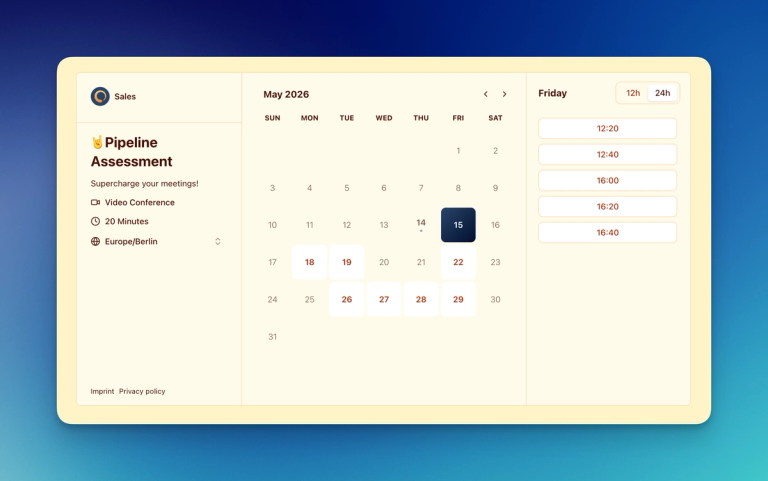
Group events with capacity and waitlists
You set a seat limit per event and the booking page counts down publicly as registrations arrive. When the last seat goes the next person joins a waitlist and is notified automatically if someone drops out, the part trainers normally run by hand in a spreadsheet. The same workshop can run on six dates with different capacities, online and in-person mixed, which decides whether a timetable change takes one edit or six. The group events feature page shows the capacity tracker.
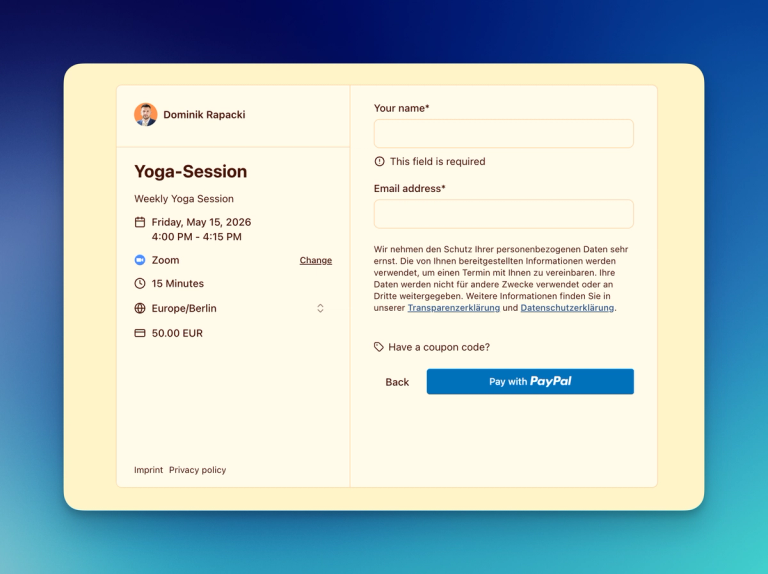
Deposits and full payment at booking
Payments run through your own Stripe or PayPal account, so a seat can require money upfront rather than a promise to pay on the day. A no-show at a free workshop costs you the seat; at a paid one it costs the attendee.
Resource booking for rooms, kit and booths
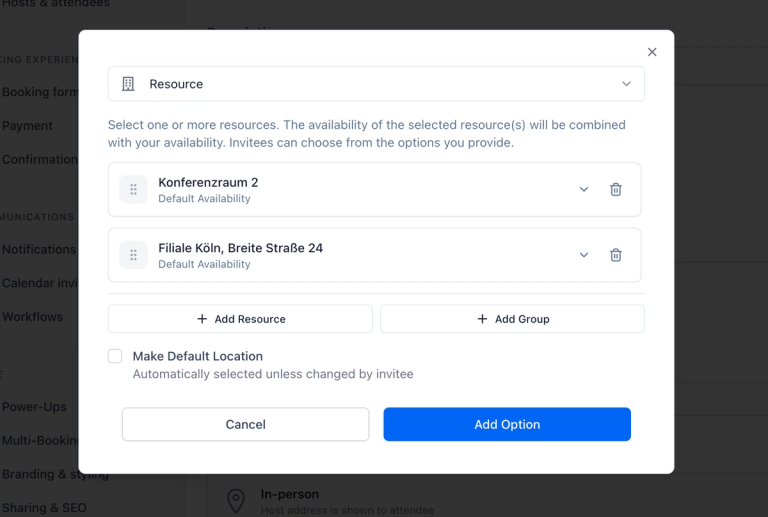
meetergo checks the host's calendar and the resource calendar at once, so a slot appears only when both the person and the room are free. Trade fair booths and demo stations behave like rooms. The resource booking feature page shows the conflict check.
Pricing
| Plan | Price |
|---|---|
| Free | €0 a month, up to 3 people, 3 meeting types |
| Light | €12.90 per person a month, yearly billing |
| Suite | €99 a month, 3 people included |
| Premium | €179 a month, 3 people included |
| Enterprise | From 30 seats, price on request |
Prices from meetergo's pricing page, checked 14 November 2026. Light carries unlimited event types, round robin, payments at booking and the removal of meetergo branding. The free plan has no time limit; paid plans add a separate 7 day trial, no card required. A promotion was running at the time of writing and is not included above.
Where it falls short
- No door scanning, so a 400 person paid event needs its own check-in process.
- No numbered or reserved seating, and no public marketplace: nobody discovers your event the way they stumble on an Eventbrite listing.
- Priced per person on the booking plan, worse value than a flat tier if ten colleagues each need their own event pages.
Customer reviews
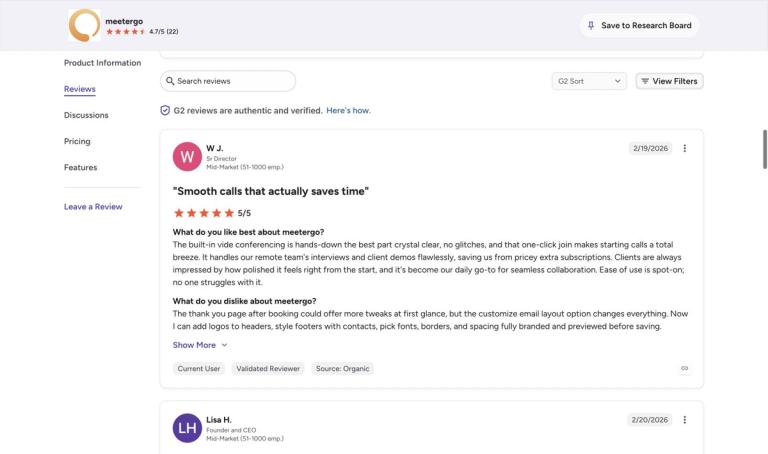
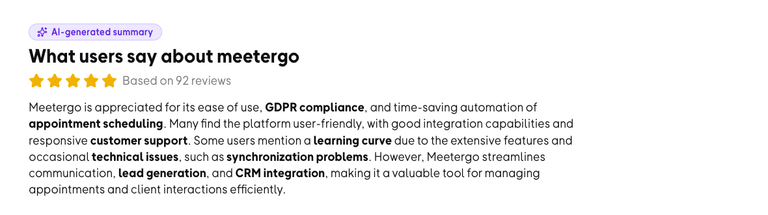
meetergo's pricing page shows an aggregate 4.8 rating and more than 50,000 customers. Two independent platforms support it, and reviewers praise the breadth of the suite and the EU hosting rather than one scheduling feature.
Who it is for: consultants, trainers, clinics and sales teams whose events are sessions with a host, where capacity, deposits and rooms matter more than ticket tiers and turnstiles.
2. Eventbrite
Eventbrite is what most people mean by event booking software, and the only tool here that also sends you attendees: its listings are browsed and indexed, so a public event picks up buyers who were never on your list. You pay per ticket instead of per month.
What it does well
- Ticket tiers, promo codes and reserved seating for larger venues
- A check-in app for scanning at the door, plus payouts and ticket tax handling
- Sales and attendee reporting per event, and paid promotion through Eventbrite Ads
- Free events are genuinely free to host
Pricing
| Plan | Price |
|---|---|
| Free events | No fee |
| Paid tickets | 3.7% + $1.79 service fee per ticket |
| Payment processing | 2.9% per order |
| Eventbrite Ads | From $15 a month |
Fees from Eventbrite's organiser pricing page, checked 14 November 2026. You can absorb the service fee or pass it to attendees at checkout.
Where it falls short
- The fee scales with your success, so a sold-out season costs multiples of a subscription.
- Weak at recurring timetables: a weekly class with a register is not the job.
- Attendee data sits with a US platform, a live question for EU organisers collecting dietary and accessibility details.
Customer reviews
Eventbrite is the most-reviewed tool here by a wide margin: 4.6 (5,823 reviews) on Capterra and 4.3 (914 reviews) on G2, both checked 14 November 2026. The gap is audience: Capterra's sample skews to small organisers who value the reach, G2's to buyers comparing it against event management suites.
Who it is for: public, paid, one-off events where discovery is worth a cut of revenue.
3. Ticket Tailor
Ticket Tailor sells the same thing as Eventbrite with the pricing flipped: a flat fee per ticket, so an £80 ticket costs the same to sell as an £8 one. Organisers who have outgrown percentage fees are the audience, and charities pay half.
What it does well
- Flat per-ticket fee, lower again on prepaid credits, and free events free at high volumes
- Your own Stripe or PayPal account, so ticket money arrives before the event, plus door check-in and sales reporting without an enterprise tier
Pricing
| Plan | Price |
|---|---|
| Pay as you go | £0.60 per ticket, excluding VAT |
| Prepaid credits | From £0.22 per ticket, excluding VAT |
| Free events | No fee |
| Charity rate | 50% off fees |
Fees from Ticket Tailor's pricing page, checked 14 November 2026, published in pounds. Card processing is separate, charged by Stripe or PayPal at their own rates.
Where it falls short
- No marketplace, so every visitor is one you brought yourself.
- Built around tickets, not calendars: staff availability and consultations are not its problem, and fees are published in pounds, which adds a currency step for US and EU budgets.
Customer reviews
4.8 (196 reviews) on G2, checked 14 November 2026, the highest score here on a much smaller sample than Eventbrite's. Capterra hosts reviews of the product without an aggregate score, so the G2 figure is the one with a stated sample size.
Who it is for: organisers selling real volume at mid to high ticket prices to an audience they already have.
4. Bookwhen
Bookwhen is a booking page for things that repeat: courses, classes, clubs. The page is a timetable rather than a next-available slot, and registers arrive on the middle tier rather than an enterprise one.
What it does well
- Timetable-style pages with one entry per session
- Attendance registers and post-event emails from the Standard plan, which is the reporting most class providers need
- Tickets, discounts and payments with no percentage cut, embedded in your own site by iframe or API
Pricing
| Plan | Price |
|---|---|
| Free | €0, 50 bookings a month, free events only |
| Lite | €12 plus VAT a month, 300 bookings, 2 team members |
| Standard | €19 plus VAT a month, 800 bookings, 5 team members |
| Plus | €39 plus VAT a month, 1,800 bookings, 10 team members |
| Enterprise | Bespoke |
Prices from Bookwhen's pricing page, checked 14 November 2026. Yearly billing costs ten months instead of twelve, and charities get 20% off.
Where it falls short
- Monthly booking caps: pass 800 on Standard and the next tier is the answer, a per-booking cost in disguise.
- The free plan refuses paid events, making it a trial rather than a tier.
- No room or resource inventory, and booking pages are capped per tier, which constrains multi-site operators.
Customer reviews
4.9 (179 reviews) on Capterra, checked 14 November 2026, with support responsiveness the recurring theme. Strong evidence from a narrow class-and-course audience, not a broad market verdict.
Who it is for: studios, tutors and clubs running a repeating timetable who want a register, not a marketplace.
5. SimplyBook.me
SimplyBook.me treats an event as one of several things a venue sells in one checkout: a table, a room, an escape room slot, rented kit. It charges a subscription with a monthly booking allowance plus custom features you switch on per plan, which is flexible and also the catch, because the features you need decide the tier.
What it does well
- Several booking types in one transaction, which suits venues and entertainment businesses
- Capacity caps per class or session, with a product catalogue behind them
- Deposits, tips and point of sale on the lower paid tiers; HIPAA and single sign-on as custom features from Standard up
Pricing
| Plan | Price |
|---|---|
| Free | €0, 50 bookings a month, 1 provider |
| Basic | €13.90 monthly, €11.90 yearly, 100 bookings, 5 providers |
| Standard | €29.90 monthly, €24.90 yearly, 500 bookings, 15 providers |
| Premium | €59.90 monthly, €49.90 yearly, 2,000 bookings, 30 providers |
| Enterprise | Custom |
Prices from SimplyBook.me's pricing page, checked 14 November 2026. Each tier includes a set number of custom features (one on Free, three on Basic, eight on Standard), and SMS credits, extra bookings and a custom domain are priced as add-ons.
Where it falls short
- The custom-feature count is the real limit: a ninth feature on Standard means Premium, whatever your booking volume.
- Allowances are monthly, so a seasonal spike pushes you up a tier for the month, and add-on pricing makes the total harder to predict than the headline implies.
Customer reviews
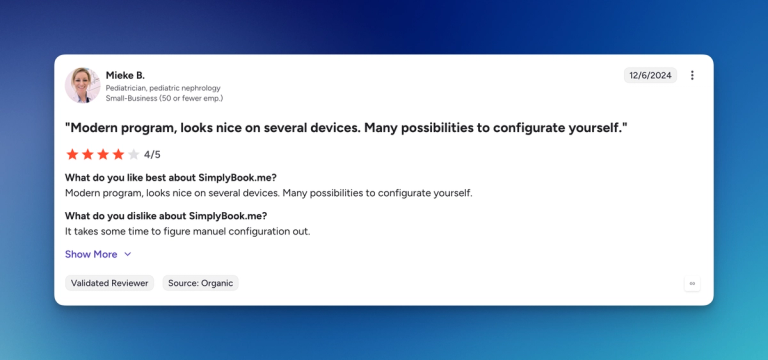
4.4 (about 118 reviews) on G2 and 4.6 (about 1,290 reviews) on Capterra, checked 14 November 2026. Value for money scores above ease of use on Capterra's sub-ratings, matching the written complaint that every custom feature costs extra.
Who it is for: venues and entertainment businesses whose customers book more than one thing at a time.
6. Appointy
Appointy sits between appointment scheduling and activity booking, and distribution distinguishes it: bookings arrive through Google and social profiles, not only a page you promote. Camps, tours and class providers are its visible customer base.
What it does well
- Reserve with Google, Instagram and Facebook as booking entry points, plus discount and deal tools for filling quiet sessions
- Booking rules and prepayments for activities that need prep time
- Reporting, resource scheduling alongside staff scheduling, and a free tier that takes paid bookings
Pricing
| Plan | Price |
|---|---|
| Free | $0, 1 staff, 5 services, 100 appointments a month |
| Growth | $19.99 a month yearly, $29.99 monthly |
| Professional | $49.99 a month yearly, $59.99 monthly |
| Enterprise | $79.99 a month yearly, $99.99 monthly |
Prices from Appointy's pricing page, checked 14 November 2026. Extra staff cost $5 a month on Growth and $7.50 on Professional, extra locations $39.99 on Enterprise, and the trial runs 14 days.
Where it falls short
- Staff seats are counted tightly, so a growing team pays per head on top of the tier, and multi-location waits for Enterprise.
- The 100 appointment cap on Free is low for a weekly timetable, and there are no box office functions: no scanning, no seat maps.
Customer reviews
Appointy publishes a customer count rather than a rating, and neither G2 nor Capterra returned an aggregate score with a sample size on 14 November 2026. Rather than quote a figure we could not verify: treat review evidence as unavailable here and test the free plan against your own timetable.
Who it is for: activity, tour and class operators who want Google and social bookings without building a funnel.
7. Planning Pod
Planning Pod is the venue-side tool here. It thinks in spaces rather than tickets: a colour-coded calendar of rooms and halls, conflict alerts when two bookings collide, and a CRM holding leads, contracts and invoices per event.
What it does well
- Event space inventory with time and space conflict alerts
- Lead tracking with tentative holds, which is how venue sales actually work
- Contracts, e-signatures, invoicing and payments in one system, with enquiry forms you embed on the venue site
Pricing
| Plan | Price |
|---|---|
| All plans | No published price list, quote on request |
Checked 14 November 2026: Planning Pod's pricing path returns no page and its sitemap lists none, so the route is a demo request. Directory listings quote a starting figure, but a third-party listing is not a vendor price.
Where it falls short
- No public pricing, so budget comparison waits for a sales call.
- Not a ticketing platform: 500 general-admission tickets is not the job, and it is overkill for anyone who needs a booking page and nothing else.
Customer reviews
4.3 (38 reviews) on Capterra, checked 14 November 2026, with customer service rated above features. A small sample describing a venue and hospitality niche rather than a market.
Who it is for: venues, caterers and hospitality teams selling space and services, not seats.
Where appointment-style booking stops and ticketing starts
This is the line the roundups blur. An appointment scheduler with group events (meetergo, Appointy, Bookwhen, SimplyBook.me) gives you a booking page, a capacity count, a waitlist, payment at booking, reminder sequences and a calendar that stays accurate. That covers workshops, classes, webinars, consultations and info evenings, which is most business events by number.
It does not give you a turnstile. No door scanning against a ticket database, no reserved or numbered seating, no box office handling resale and transfers, no marketplace where people find your event without you sending them. If one of those four is load-bearing, you want a ticketing platform and the per-ticket fee is the price of entry.
The reverse mistake is quieter and more expensive. Teams running a weekly timetable of 30 person workshops sometimes buy a ticketing platform because the word event was in their requirements, pay percentage fees on every seat, and still keep registers in a spreadsheet, because ticketing platforms do not think in recurring sessions. Readers weighing a free tool for one-to-one meetings instead will get more from our breakdown of Calendly's free plan and what it leaves out.
Attendee data: what you hand over when you take registrations
A registration form asks for more than an appointment ever does. Names and emails, usually a phone number, often dietary requirements, accessibility needs and job titles, sometimes an identity document for secure sites, plus payment details. That is a richer personal data set than most CRMs hold, collected in an afternoon from several hundred people.
Under the GDPR you stay the controller of that list and the platform processes it. Two questions decide how comfortable that is: where the data is stored, and whether the platform's parent company sits under a regime that can compel access to it. US-headquartered ticketing platforms process attendee data in the US, which is why EU public bodies, clinics and universities keep landing in a data protection review before they can use one.
meetergo is a German company and hosts in Nuremberg. Nuremberg hosting under German ownership is what keeps a registration list inside EU jurisdiction and out of reach of a US corporate parent, including the dietary and accessibility fields nobody thinks of as sensitive until an audit. Weigh it against the rest: for 200 strangers buying concert tickets, discovery outranks data residency; for 40 named clients at a healthcare training day, it does not.
Who each tool is for
- Public, paid, one-off events needing an audience you do not have: Eventbrite. Pay the percentage knowingly and book it as marketing.
- High ticket volume to your own audience: Ticket Tailor, where prepaid credits sharpen the flat fee.
- A repeating timetable of classes: Bookwhen for registers, SimplyBook.me when the same checkout also sells rooms, tables or kit.
- Activities and tours that live on Google and social: Appointy, staff-seat pricing checked against your roster first.
- A venue selling space, contracts and catering: Planning Pod, with a budget conversation before the demo.
- Sessions with a host, plus the rooms they need: meetergo, on Light for payments at booking and your own branding.
Open registrations for your next workshop.

Open registrations for your next workshop.
Frequently asked questions
What is event booking software?
Event booking software lets people reserve a place at an event themselves, online, and keeps capacity, payments and the attendee list correct without manual work. The term spans four product categories, which is why two tools with the same label can look nothing alike.
Can I take payment when someone books?
Yes, in all seven, though the plumbing differs. Ticketing platforms take a fee per ticket and pay you out; booking tools connect your own Stripe or PayPal account, so money lands with you directly and you can ask for a deposit instead of the full amount.
Is there a free event booking system?
Several. Eventbrite and Ticket Tailor charge nothing for free events, Bookwhen's free tier handles 50 free bookings a month, SimplyBook.me allows 50 of any kind, and meetergo's free plan covers up to three people with no time limit. Our comparison of free online booking systems shows where each free tier stops.
How many tickets before a subscription is cheaper?
Six $40 tickets generate about $20 of Eventbrite service fees, already the whole monthly platform fee on Bookwhen's Standard plan at €19. The crossover arrives in the first week, not the first season, so discovery value rather than price is the reason to stay on a percentage model.
Can one tool handle both my classes and my room hire?
SimplyBook.me and meetergo both do, from different directions: SimplyBook.me sells several booking types in one checkout, meetergo attaches rooms and equipment to session types so a slot shows only when both are free. A dedicated class booking system is simpler if room hire is a side line.
Still deciding? Open a free account and build the page for your next workshop in meetergo's scheduling app, capacity, waitlist, deposit and reminders included, before you commit to a platform fee that scales with your success.
Sources
Vendor pricing pages, all checked 14 November 2026: Eventbrite organiser pricing, Ticket Tailor pricing, Bookwhen pricing, SimplyBook.me pricing, Appointy pricing, Planning Pod (none published) and meetergo's pricing page. Review scores and sample sizes link inline to each product's Capterra or G2 listing, checked the same day.