
For years, Nylas was the go-to "proxy" for developers who didn't want to deal with the fragmented world of IMAP, SMTP, and CalDAV. However, by 2026, the landscape has shifted significantly. The market is currently experiencing "Migration Fatigue" due to the forced transition from Nylas v2 to v3, which required many teams to rebuild their authentication flows and handle new "Grant" based logic.
Furthermore, the legal environment has tightened. With the US Cloud Act making US-based proxies a liability for European firms, and the rise of AI-driven meeting intelligence, developers now demand more than just a data pipe they want a secure, intelligent productivity layer.
Quick Comparison: The 2026 API Leaderboard
| Provider | Core Strength | Technology | Data Hosting | Best For |
|---|---|---|---|---|
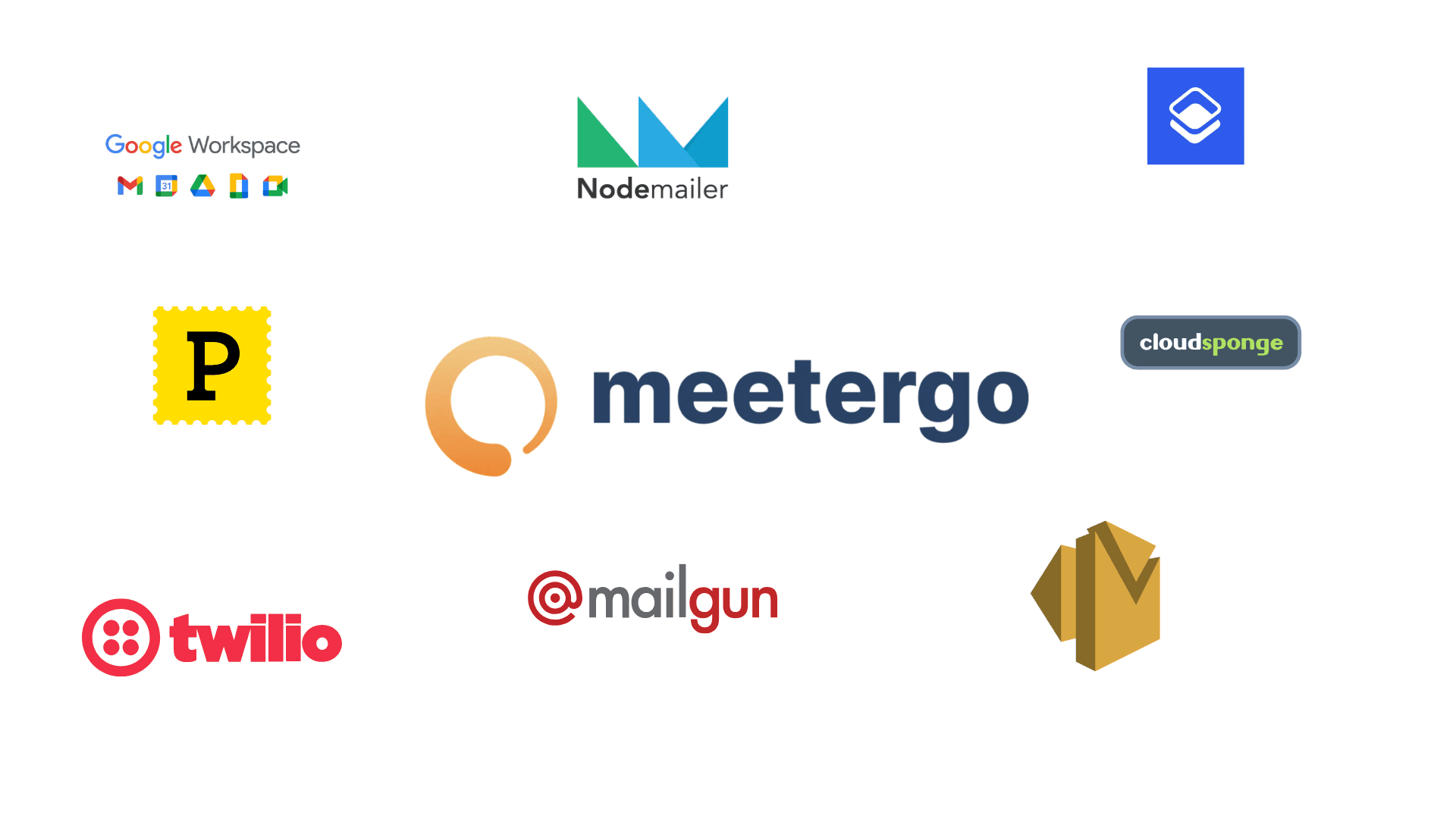
meetergo | Productivity + Privacy | Local AI / Sync | Germany 🇩🇪 | EU-regulated Teams |
Providermeetergo Core StrengthProductivity + Privacy TechnologyLocal AI / Sync Data HostingGermany 🇩🇪 Best ForEU-regulated Teams | ||||
Aurinko | CRM Sync Logic | Unified API | US/EU | CRM Developers |
ProviderAurinko Core StrengthCRM Sync Logic TechnologyUnified API Data HostingUS/EU Best ForCRM Developers | ||||
Microsoft Graph | Native M365 Access | Direct API | Global | Enterprise Teams |
ProviderMicrosoft Graph Core StrengthNative M365 Access TechnologyDirect API Data HostingGlobal Best ForEnterprise Teams | ||||
Cronofy | Scheduling Logic | Unified Calendar | UK/Global | HR & Booking Apps |
ProviderCronofy Core StrengthScheduling Logic TechnologyUnified Calendar Data HostingUK/Global Best ForHR & Booking Apps | ||||
CloudSponge | Contact Importing | Contact API | US | Referral Programs |
ProviderCloudSponge Core StrengthContact Importing TechnologyContact API Data HostingUS Best ForReferral Programs | ||||
Postmark | Email Delivery | SMTP/API | US | Transactional Mail |
ProviderPostmark Core StrengthEmail Delivery TechnologySMTP/API Data HostingUS Best ForTransactional Mail | ||||

1. meetergo (The #1 Choice for Productivity & GDPR) 🏆
(Best for: Teams needing a secure scheduling layer + local AI transcription)
In 2026, meetergo has evolved from a pure scheduler into a full-scale Sovereignty Ecosystem. While Nylas acts as a "middleman" that processes your users' sensitive email and calendar data on its own servers (often in the US), meetergo prioritizes Data Minimization and Local Intelligence.
Why it beats Nylas in 2026:
- GDPR & The Nuremberg Advantage: Unlike Nylas, which is subject to the US Cloud Act, meetergo is a European-owned company. All data is hosted on ISO 27001-certified servers in Nuremberg, Germany. For legal, medical, and financial sectors, this is the only way to ensure 100% compliance.
- The "Invisible" AI Meeting Log: Nylas offers a "Notetaker API" that sends a bot into meetings. meetergo Log uses Local AI (running Whisper models on the user's device). This means transcription and summarization happen locally—no audio ever leaves the machine, and no intrusive bots join the call.
- Headless Scheduling Engine: meetergo provides a developer-first "Headless" engine. You can build your own booking UI using their React/Vue components or raw API, ensuring users stay within your app experience rather than being redirected to a third-party page.
Detailed Pros & Cons:
- ✅ Local AI Processing: Unlimited transcription and summarization with $0 server costs and 100% privacy.
- ✅ Native Security: Immune to US Cloud Act; no data transfer to third countries.
- ✅ High-Conversion Features: Built-in video booking pages and digital QR business cards to bridge the digital-physical gap.
- ✅ Developer-Friendly: Comprehensive API for white-labeling, custom CSS injection, and multi-tenant management.
- ❌ No Legacy Email Sync: While it handles calendars and contacts perfectly, it does not offer a unified "Email Inbox Sync" API like Nylas (though it integrates with your existing mail providers for notifications).
- ❌ Desktop App for AI: To use the Local AI transcription features, a lightweight desktop client is required (Mac/Windows).
Link: meetergo.com
If you need to switch for legal reasons, see the EU-hosted alternatives overview.
Same features, European jurisdiction

Same features, European jurisdiction

2. Aurinko (The Scalable Sync Specialist)
(Best for: Developers building deep CRM integrations)
If your goal is a 1:1 technical replacement for the Nylas Unified API, Aurinko is the top contender in 2026. Aurinko is built as an API Gateway rather than a storage-heavy proxy, which makes it faster and often more secure than the old Nylas v2 architecture.
Why it beats Nylas in 2026:
- Pre-Built CRM Sync Logic: Nylas gives you the "pipe," but you have to build the "pump" (the logic that decides how a Gmail event maps to a Salesforce lead). Aurinko’s BrightSync engine comes with pre-built logic for bidirectional sync, reducing development time by months.
- Virtualized CRM API: Aurinko allows you to treat multiple CRMs (Salesforce, HubSpot, NetSuite) as a single unified API. If you are building a tool that needs to push email activity to whatever CRM your client uses, Aurinko is the most efficient route.
- Transparent Pricing: While Nylas has moved toward complex "base + per-account" models that can scale rapidly, Aurinko remains highly affordable with plans starting as low as $1/account/month.
Detailed Pros & Cons:
- ✅ Unified Data Models: One API for Email, Calendar, Contacts, and Tasks across Google, Outlook, and even IMAP/POP3.
- ✅ Lower Latency: Their "Gateway" approach means they don't store your data; they pass it through, reducing the "sync delay" often seen in Nylas.
- ✅ CRM Virtualization: Native support for mapping communication data to enterprise CRMs without custom middleware.
- ❌ Technical Setup: Like Nylas, it is strictly a developer tool; there is no "out-of-the-box" UI for end-users.
- ❌ US/Global Hosting: While they offer EU options, their core is US-centric, which may require additional DPA vetting compared to meetergo.
Link: Aurinko.io

3. Microsoft Graph API (The Enterprise Standard)
(Best for: Companies deeply embedded in the M365 ecosystem)
If your user base is primarily on Outlook and Teams, using a third-party proxy like Nylas is often an unnecessary cost. Microsoft Graph gives you direct, native access to the entire Microsoft 365 stack. In 2026, Microsoft has consolidated its developer tools, retiring the legacy Graph Toolkit in favor of more performant, AI-ready SDKs that integrate directly with Microsoft Copilot.
- The Edge: Native integration means higher rate limits for enterprise tenants and zero additional cost if you already have a Microsoft Business license. It also provides the most secure way to access "sensitive" data without a middleman.
- ✅ Direct Access: No third-party proxy latency; your app talks directly to Microsoft's servers.
- ✅ AI Integration: Native support for Microsoft Copilot connectors, allowing you to ground AI responses in actual M365 data.
- ✅ Enterprise Compliance: Features like "Administrative Units" allow you to scope data access to specific departments rather than the whole company.
- ❌ Ecosystem Lock-in: Excellent for Outlook, but you’ll need a separate integration for Gmail/Google Workspace.
- ❌ Learning Curve: The documentation and permission scopes are vast and can be overwhelming for smaller projects.
Link: Microsoft Graph

4. Cronofy (The Calendar-First API)
(Best for: HR-tech and complex interview scheduling)
Cronofy is the specialist for calendar-only integrations. While it doesn't handle email sync, its calendar features—such as real-time availability and organizational unit management—are superior for booking-heavy apps. In 2026, they have expanded their "Sovereign Workspace" to guarantee that data residency matches the user's specific jurisdiction.
- The Edge: They offer a "Sovereign Workspace" that ensures data is stored within specific geographical jurisdictions (UK, EU, US).
- ✅ Sophisticated Availability: Handles complex "Find-a-Time" logic for panels (e.g., "Find any 2 out of these 5 interviewers").
- ✅ Privacy by Design: ISO 27001 certified and GDPR compliant with a focus on data minimization.
- ✅ Real-Time Sync: One of the fastest engines for detecting "ghost" calendar events and tentative blocks.
- ❌ Calendar Only: You will need a separate provider like Postmark or SendGrid for email functionality.
- ❌ Pricing Structure: Can be expensive if you only need basic calendar sync for a large number of users.
Link: Cronofy.com

5. Google Workspace APIs (The Native Gmail Route)
(Best for: Apps targeting a consumer/Gmail audience)
Using the Gmail API and Google Calendar API directly removes the "middleman risk." By January 2026, Google has fully implemented Granular OAuth Consent, which lets users grant access to specific calendars or labels rather than their entire account—dramatically increasing user trust.
- The Edge: Total control over the user experience and direct access to Google’s latest security features (like BIMI and AI-powered spam filtering).
- ✅ Enhanced Security: Native support for the newest Google security protocols and Granular Consent screens.
- ✅ Zero Fees: Unlike Nylas, there is no "per-account" sync fee to pay a third party.
- ✅ Deep Integration: Access to advanced Workspace features like Google Meet artifacts (transcripts and recordings) directly via the API.
- ❌ Complex Verification: High-volume apps must undergo a rigorous (and sometimes expensive) security assessment by Google.
- ❌ Manual Sync Logic: You are responsible for building the polling/webhook logic to keep your data in sync.
Link: Google Workspace Developers

6. CloudSponge (The Contact Import Expert)
(Best for: "Refer-a-Friend" features and address book syncing)
Nylas offers a general Contact API, but CloudSponge is a specialist. It is designed specifically to help users import their address books from any provider (Yahoo, AOL, Outlook, Gmail) to grow your platform's network.
- The Edge: Features a pre-built UI widget that makes contact importing 10x faster to implement than building a custom integration on Nylas.
- ✅ Normalized Data: Returns contact records in a consistent format regardless of whether they came from Gmail or a CSV upload.
- ✅ Viral Growth: Specifically optimized for referral and invitation flows to maximize "Contact Picker" conversion rates.
- ✅ Maintenance-Free: They handle all the breaking changes from various contact providers so you don't have to.
- ❌ Niche Use Case: Not a general-purpose email or calendar sync tool.
- ❌ Privacy Scrutiny: Importing entire address books requires very clear user communication and privacy policies.
Link: CloudSponge.com

7. Postmark (The Gold Standard for Delivery)
(Best for: Developers who prioritize transactional email speed)
If your primary use for Nylas was sending transactional emails, Postmark is a significantly better choice. In 2026, Postmark remains the only provider that publicly shares its real-time delivery metrics, aiming for a "Time-to-Inbox" of under 10 seconds.
- The Edge: They keep transactional and marketing emails on separate "Message Streams" to ensure your critical app notifications (like password resets) never hit the spam folder.
- ✅ Lightning Speed: Optimized for transactional delivery with zero "bulk email" baggage on their core servers.
- ✅ Expert Support: One of the few companies that provides high-level human support even on lower-tier plans.
- ✅ Inbound Processing: Excellent tools for parsing incoming emails into JSON, allowing your app to "read" replies.
- ❌ Limited Inbox Sync: Excellent for sending and receiving via API, but not designed for full mailbox "mirroring."
- ❌ Strict Approval: They manually vet every new account to protect their sender reputation, which can slow down initial setup.
Link: Postmarkapp.com

8. Timekit (The Custom Booking Engine)
(Best for: High-volume resource and staff scheduling)
Overview: Timekit is a developer-first platform that focuses on the logic of availability. In 2026, it has become the standard for businesses that don't just schedule people, but "inventory." If you are building a platform where you need to coordinate a specific consultant, a specialized medical room, and a piece of equipment simultaneously, Timekit’s "Find-a-Time" engine is unrivaled.
- The Edge: Highly flexible "Find-a-Time" logic that is much more powerful than basic calendar sync.
- ✅ Resource Nesting: Manage complex dependencies (e.g., a meeting that requires both a Senior Partner and a specific conference room).
- ✅ Granular Project Rules: Define unique availability patterns for different projects or clients within the same account.
- ✅ Whitelabel by Default: Designed to be embedded deeply into your own application's UI without any "Timekit" branding.
- ❌ Specialized Focus: It is a scheduling engine, not a communication tool; you won't get email sync or contact management here.
- ❌ Dev-Heavy: Not suitable for non-technical users; you will need an engineer to build the frontend.
Link: Timekit.io
Everything Calendly does, plus video, CRM, and GDPR.
Everything Calendly does, plus video, CRM, and GDPR.

9. Mailgun (The High-Volume Powerhouse)
(Best for: Applications sending millions of emails monthly)
Overview: For massive outbound communication, Mailgun remains a robust enterprise choice in 2026. While it lacks the "inbox mirroring" capabilities of Nylas, it provides a 99.99% uptime SLA and an industry-leading Email Validation API that cleans your lists in real-time to prevent bounces.
- The Edge: Features advanced "Email Validation" to keep your bounce rates low and your sender reputation high.
- ✅ Massive Scalability: Built to handle bursts of millions of emails without latency spikes.
- ✅ Detailed Logs: Provides 30 days of event history and deep analytics into "why" an email was dropped or delayed.
- ✅ Inbound Routing: Powerful RegEx-based routing to parse incoming emails and push them to your webhooks.
- ❌ Pricing at Scale: The "Scale" plan can become significantly more expensive than Amazon SES as your volume grows.
- ❌ No Calendar Support: Strictly an email delivery and parsing engine.
Link: Mailgun.com

10. Twilio SendGrid (The Multichannel Giant)
(Best for: Teams needing a consolidated communications stack)
Overview: SendGrid is the "safe" corporate choice. By 2026, it has deepened its integration with the broader Twilio ecosystem, allowing developers to manage Email, SMS, and WhatsApp notifications through a single unified billing and identity platform.
- The Edge: The most extensive set of APIs for email marketing and transactional notifications combined.
- ✅ Reliability: The most trusted name in the industry with massive IP pools and established relationships with all major ISPs.
- ✅ Dynamic Templates: A sophisticated drag-and-drop editor that allows non-devs to edit email templates while devs manage the API triggers.
- ✅ Unified Billing: Consolidate your communication costs if you already use Twilio for Voice or SMS.
- ❌ Support Delays: High-volume accounts get priority, but smaller startups often report slow ticket response times.
- ❌ Rigid Account Logic: Historically strict about account sub-users and "teaming," which can be a hurdle for agencies.
Link: SendGrid.com

11. Nodemailer / ImapFlow (The Open Source Route)
(Best for: Developers who want zero vendor lock-in)
Overview: If you have a strong engineering team and want to bypass "middleman" fees entirely, the open-source route is thriving in 2026. Nodemailer (for sending) and ImapFlow (for receiving/syncing) allow you to talk directly to mail servers without a proxy.
- The Edge: $0 API costs. You own the data, the sync frequency, and the security protocols.
- ✅ Full Sovereignty: No data ever touches a third-party server (other than the mail provider itself).
- ✅ Customizable Sync: You decide exactly how often to poll for new mail or how to handle attachments.
- ✅ Zero Vendor Lock-in: You can switch from one IMAP server to another without changing your core logic.
- ❌ High Maintenance: You are responsible for handling server timeouts, rate limits, and complex MIME parsing.
- ❌ DevOps Overhead: Requires managing your own background workers and database to store the synced data.
Link: Nodemailer.com

12. Amazon SES (The Budget Leader)
(Best for: Cost-conscious startups with high volume)
Overview: For raw email sending, nothing in 2026 beats the price of Amazon Simple Email Service (SES). At $0.10 per 1,000 emails, it is an order of magnitude cheaper than Nylas or SendGrid for purely transactional needs.
- The Edge: Seamless integration with the AWS ecosystem (Lambda, S3, CloudWatch).
- ✅ Lowest Cost in Market: Perfect for bootstrapped startups that need to send high-volume notifications.
- ✅ First Year Free: Includes up to 3,000 messages per month for the first 12 months after signup.
- ✅ AWS Native: Use IAM roles for security and CloudWatch for real-time monitoring of delivery failures.
- ❌ Complex Setup: The UI is notoriously "AWS-standard"—functional but not intuitive.
- ❌ Reputation Management: You are responsible for your own "warm-up" process unless you pay for a managed dedicated IP ($24.95/mo).
Link: Amazon SES
Buyer's Guide: Which Alternative is Right for You?
- If Privacy & GDPR are Non-Negotiable: Choose meetergo. The combination of German hosting and Local AI transcription is the most secure setup available in 2026 for teams handling sensitive European data.
- If You Need Bidirectional Sync for a CRM: Choose Aurinko. It provides the most specialized logic for keeping third-party inboxes in sync with your database without you having to build the sync-engine from scratch.
- If You Are Building for Enterprise (M365): Use the Microsoft Graph API directly. It bypasses proxy latency and significantly reduces your monthly API bill.
- If You Are Bootstrapping: Go the Nodemailer or Amazon SES route. It requires more engineering hours upfront but keeps your monthly burn rate at nearly zero.
Frequently Asked Questions
1. Why are developers moving away from Nylas in 2026? The primary drivers are the Nylas v3 migration complexity and rising costs. Many developers found that the transition from v2 to v3 required significant code rewrites (specifically around the new "Grants" logic). Additionally, as GDPR and the US Cloud Act have become central concerns, the "proxy" model used by US-based providers is often seen as a compliance risk compared to native EU-hosted alternatives like meetergo.
2. Is meetergo a 1:1 replacement for the Nylas Email API? Not exactly. While Nylas focuses on "Email Inbox Syncing" (mirroring entire inboxes), meetergo is a Productivity & Scheduling Engine. Choose meetergo if your goal is to build secure scheduling, automate meeting documentation with AI, and sync calendars. If you need to build a full-scale email client with bidirectional inbox sync, Aurinko or native Gmail/Outlook APIs are more direct technical replacements.
3. How does the "Local AI" in meetergo differ from Nylas's Notetaker API? Nylas’s Notetaker API usually sends a visible bot into a meeting to record and process audio in the cloud. meetergo Log uses Local AI, meaning the transcription and summarization happen on the user's hardware. This results in $0 processing fees, zero bot intrusion, and significantly higher privacy, as sensitive audio data never leaves the local device.
4. Can I migrate from Nylas to these alternatives without losing user data? Yes. For calendar and contact data, most alternatives like Cronofy or Aurinko allow you to map your existing Nylas account_id to their own internal IDs. Since the source of truth remains the user’s Google or Microsoft account, you simply need to re-authenticate the users (or migrate their tokens) to the new provider to resume syncing.
5. How does the pricing of these alternatives compare to Nylas? Nylas typically charges a base fee + per-connected-account fee, which can become expensive as you scale.
- meetergo and Cronofy offer more predictable per-user or flat-tier pricing.
- Aurinko offers a low-cost $1/account entry point.
- Amazon SES and Nodemailer are the budget leaders for those who only need email-sending capabilities without the "sync" overhead.
Everything Calendly does, plus video, CRM, and GDPR.
Everything Calendly does, plus video, CRM, and GDPR.