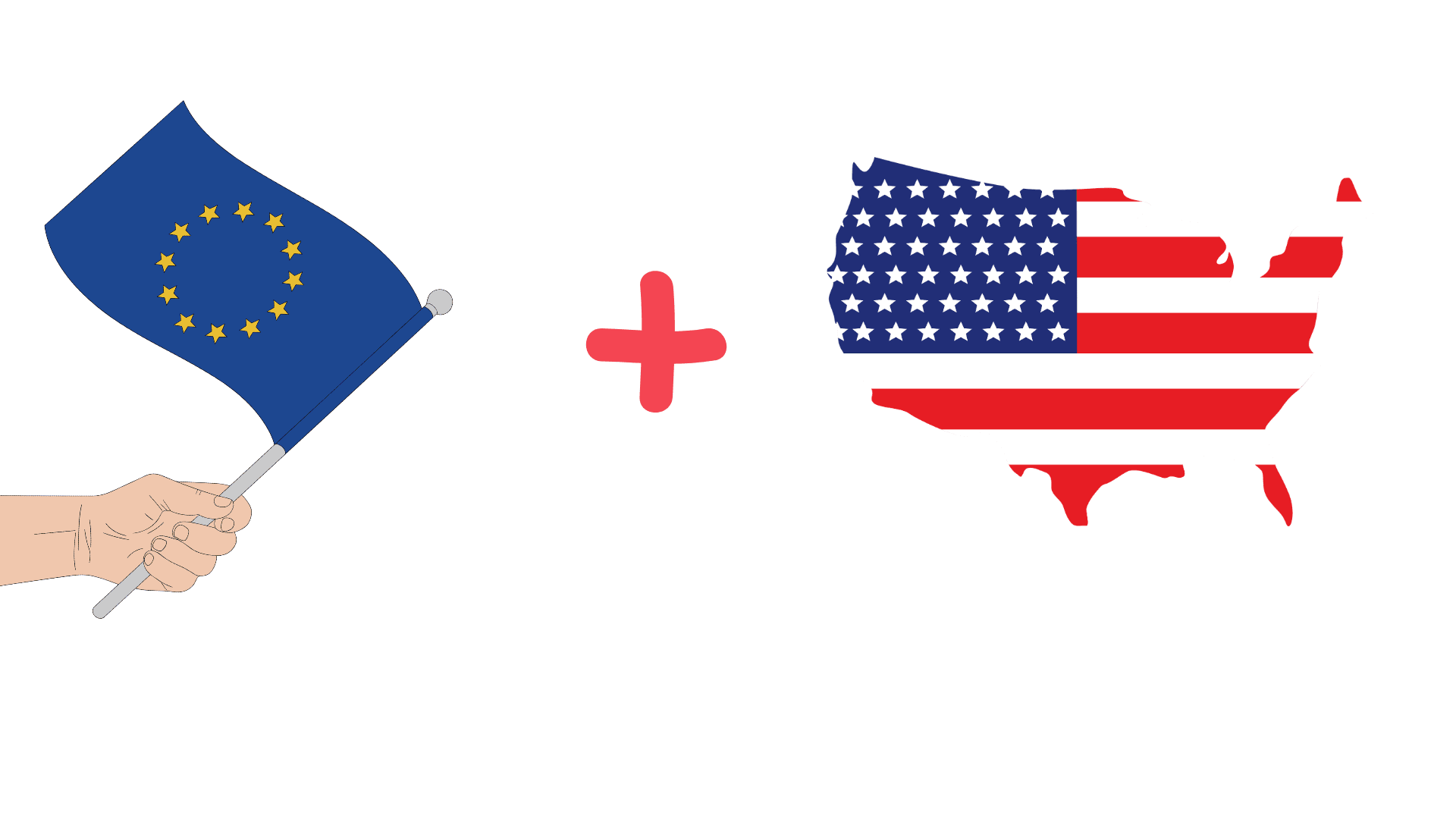

In 2026, the strategy of "ignoring Europe" has shifted from a risky gamble to a documented business failure. For U.S.-based SaaS, E-commerce, and AI firms, the European market represents over 450 million consumers protected by the world's most stringent privacy laws. As data becomes the primary fuel for the AI revolution, the General Data Protection Regulation (GDPR) has evolved from a regional hurdle into the global gold standard for data ethics.
The 2026 Reality: DPF & The AI Act
The landscape is now defined by two major pillars:
- EU-U.S. Data Privacy Framework (DPF): This adequacy decision has finally stabilized transatlantic data flows. While it has significantly streamlined compliance for certified companies, it has not eliminated the underlying requirements of the GDPR.
- The EU AI Act: Fully applicable as of August 2026, this regulation adds a layer of complexity for any U.S. firm using machine learning to process European data.
Executive Summary
The financial stakes have never been higher. With maximum fines reaching €20 million or 4% of global annual turnover, a single compliance gap can erase years of profit. Beyond the balance sheet, the "Reputational Tax" is real—U.S. companies that fail to respect digital borders face "shadow-banning" from European procurement lists and a permanent loss of consumer trust.
Does the GDPR Apply to Your U.S. Business? (The Article 3 Test)
The GDPR is extra-territorial, meaning it follows the data, not the company. To determine your liability, you must pass the "Article 3 Test."
1. The Targeting Criterion
Does your organization offer goods or services (even free ones) to individuals in the EU?
- Indicators: Pricing in Euros (€), marketing in European languages, or using a top-level domain like .de or .fr.
- Key Fact: Even a free newsletter targeting EU residents triggers GDPR obligations.
2. The Monitoring Criterion
This is the most common trap for U.S. tech firms. If you track the behavior of individuals located in the EU, you are in scope.
- Tracking: Using cookies for behavioral advertising or IP logging for analytics.
- AI Profiling: Using AI models to analyze preferences, health, or financial status of EU residents.
3. The "Establishment" Trap
Under the establishment criterion, having even a single remote employee, a sales agent, or a co-working space membership in an EU member state can bring your entire U.S. operation under the GDPR's jurisdiction.
U.S. Privacy Sentiment: Why Compliance is a Competitive Advantage
Demographic Data: A Consumer Demand
Privacy is no longer just a legal hurdle; it is a primary consumer demand in the United States. Research indicates that privacy concerns are deeply felt across different demographics, often correlating with historical experiences of surveillance or data misuse.
According to Pew Research Center data, privacy concerns vary significantly across U.S. demographic lines:
| Demographic Group | % Concerned About Company Data Use |
|---|---|
Black Americans | 81% |
Demographic GroupBlack Americans % Concerned About Company Data Use81% | |
Hispanic Americans | 75% |
Demographic GroupHispanic Americans % Concerned About Company Data Use75% | |
White Americans | 71% |
Demographic GroupWhite Americans % Concerned About Company Data Use71% | |
Age Dynamics:
- 71% of adults aged 18–29 report feeling they have little to no control over the data companies collect about them.
- In contrast, this sentiment rises to 83% for those aged 65 and older.
The "Trust Premium"
Savvy U.S. companies are now using GDPR compliance as a "seal of quality." By adopting the "Privacy by Design" framework, they gain a competitive edge in the domestic market, appealing to the growing number of privacy-conscious Americans who view GDPR-level protection as a mark of a trustworthy brand.
Core Requirements: The "Privacy by Design" Framework
1. The 6 Lawful Bases for Processing
You cannot process EU data without a valid legal reason. While Consent is the most famous, it is often the hardest to maintain.
- Focus on "Legitimate Interest": In 2026, this has become the most flexible basis for U.S. firms, but it requires a documented Legitimate Interest Assessment (LIA) to prove that your business interests do not override the individual's rights.
2. The Data Protection Principles (Article 5)
- Data Minimization: Only collect what is strictly necessary.
- Purpose Limitation: Don't use data collected for a "shipping update" to suddenly train your marketing AI.
- Storage Limitation: Establish automated "data sunsets." Keeping data "forever" is now a primary trigger for regulatory audits.
3. Data Subject Rights (The "Big 8")
Individuals in the EU hold specific rights that U.S. companies must facilitate through easy-to-use portals:
- Right to Erasure (Right to be Forgotten): The obligation to delete data upon request, including from backups and downstream sub-processors.
- Right to Data Portability: Providing data in a structured, machine-readable format (e.g., JSON or CSV) so the user can transfer it to a competitor.
Data Transfers: Moving Data from the EU to the U.S.
Transatlantic data flow is the lifeblood of U.S. tech, but in 2026, it remains the most scrutinized area of compliance. Following the "Schrems" era, the path is now clearer but more demanding.
The EU-U.S. Data Privacy Framework (DPF)
The DPF is the preferred path for 2026. U.S. companies that self-certify with the Department of Commerce benefit from an "Adequacy Decision," meaning data can flow without additional safeguards.
- The Catch: Self-certification is not "set and forget." It requires annual re-certification and public commitment to DPF principles.
- Redress: It grants EU citizens access to a Data Protection Review Court (DPRC) to challenge U.S. government data access.
Standard Contractual Clauses (SCCs) & TIAs
If your organization is not DPF-certified, or you are transferring data to a non-certified vendor, you must use SCCs.
- Transfer Impact Assessments (TIAs): Under 2026 standards, an SCC is legally insufficient without a TIA. You must technically document why the recipient's country (the U.S.) does not undermine the data's protection, often requiring "Supplementary Measures" like end-to-end encryption where the U.S. host holds no keys.
The 72-Hour Breach Clock: Detection & Notification
In 2026, regulators no longer accept "we are still investigating" as an excuse for silence.
Definition of a Breach
A breach is not just a hacker stealing a database. Under GDPR, it is any "accidental or unlawful destruction, loss, alteration, or unauthorized disclosure" of data.
- Example: An employee accidentally emailing a spreadsheet of EU customer names to the wrong recipient is a reportable breach if it poses a risk to those individuals.
The Reporting Workflow
- Detection: The 72-hour clock starts the moment you become aware of the breach.
- The Lead Supervisory Authority: You must report to the regulator where your EU Representative is based.
- Data Subjects: If the breach is "high risk" (e.g., plain-text passwords or medical info), you must notify the individuals directly without undue delay.
GDPR vs. U.S. State Laws: 2026 Comparison
U.S. companies often confuse the CCPA with GDPR. While similar, the GDPR is significantly more restrictive regarding the legal basis for even having the data in the first place.
| Feature | GDPR (EU) | CCPA/CPRA (CA) | VCDPA (VA) |
|---|---|---|---|
Consent Model | Opt-in by default | Opt-out of sale | Opt-out of sale |
FeatureConsent Model GDPR (EU)Opt-in by default CCPA/CPRA (CA)Opt-out of sale VCDPA (VA)Opt-out of sale | |||
Scope | Global (Targeting) | Revenue/Volume based | Volume based |
FeatureScope GDPR (EU)Global (Targeting) CCPA/CPRA (CA)Revenue/Volume based VCDPA (VA)Volume based | |||
Right to Delete | Absolute (mostly) | Absolute | Absolute |
FeatureRight to Delete GDPR (EU)Absolute (mostly) CCPA/CPRA (CA)Absolute VCDPA (VA)Absolute | |||
Fines | Up to 4% Global Turnover | $2,500 - $7,500 / incident | $7,500 / incident |
FeatureFines GDPR (EU)Up to 4% Global Turnover CCPA/CPRA (CA)$2,500 - $7,500 / incident VCDPA (VA)$7,500 / incident | |||
Sensitive Data | Racial, health, political | SPI (Limited) | Opt-in Required |
FeatureSensitive Data GDPR (EU)Racial, health, political CCPA/CPRA (CA)SPI (Limited) VCDPA (VA)Opt-in Required | |||
Booking + video conferencing in one tool.

Booking + video conferencing in one tool.
H2: The 2026 Compliance Checklist for U.S. Entities
1. Appoint an EU Representative (Article 27)
If you have no physical office in the EU but target its residents, you must appoint a legal representative in an EU member state. They act as the local point of contact for regulators.
2. The Data Mapping Audit
You cannot protect what you cannot find. A 2026 audit must identify:
- Shadow IT: Marketing tools or AI plugins used by employees that haven't been vetted.
- Data Silos: Legacy backups or "test" databases containing real PII.
3. AI Impact Assessments (The 2026 Requirement)
With the EU AI Act fully in force, if your U.S. company uses AI to process EU data (e.g., for automated hiring, credit scoring, or personalized marketing), you must conduct a Fundamental Rights Impact Assessment (FRIA) alongside your standard Data Protection Impact Assessment (DPIA).
Fines & Enforcement: Calculating the Risk
The GDPR’s "teeth" are its administrative fines. For U.S. companies, the risk is calculated using the following upper-limit formula:
2024-2025 Case Studies
- Meta (2023-2024): Continued to face billion-euro scrutiny over transatlantic data transfers.
- LinkedIn (Oct 2024): Fined €310 million for behavioral advertising practices without a valid legal basis.
- Uber (Aug 2024): Fined €290 million by the Dutch DPA for transferring driver data to the U.S. without adequate safeguards.
Technology Solutions: Automating Compliance
Privacy-First Schedulers
One "low-hanging fruit" for U.S. companies is switching to European-hosted platforms for customer interactions. Using a tool like meetergo—which is hosted entirely in Nuremberg—removes the "Transatlantic Transfer" risk entirely for your booking and meeting data.
Consent Management Platforms (CMPs)
In 2026, "cookie banners" must be machine-readable. Tools that offer granular consent and automated "Right to be Forgotten" workflows are essential to avoid the €20M tier of fines.
Booking + video conferencing in one tool.
Booking + video conferencing in one tool.
Frequently Asked Questions
- Does GDPR apply to U.S. Citizens? No. It applies to anyone physically located in the EU, regardless of their citizenship. An American tourist in Paris is protected; a French citizen in New York is not.
- Is there a "Small Business" exemption? No. Unlike the CCPA (which has revenue thresholds), the GDPR applies to a one-person startup if they are monitoring the behavior of EU residents.
- Can EU regulators actually sue a U.S. company? Yes. Through international treaties, asset seizures of EU-based servers/accounts, and the mandatory EU Representative, regulators have multiple levers to enforce payment.